


- Afhalen na 1 uur in een winkel met voorraad
- Gratis thuislevering in België vanaf € 30
- Ruim aanbod met 7 miljoen producten
- Afhalen na 1 uur in een winkel met voorraad
- Gratis thuislevering in België vanaf € 30
- Ruim aanbod met 7 miljoen producten





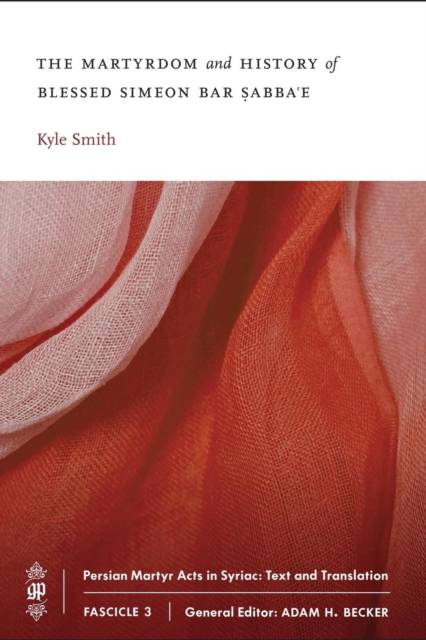
The Martyrdom and History of Blessed Simeon bar Sabba'e
Kyle Smith
€ 108,45
+ 216 punten
Omschrijving
Around the year 339 CE, Simeon bar Sabbae (the bishop of Seleucia-Ctesiphon on the Tigris) was killed by the Persian king Shapur II. Simeon was arrested for refusing to collect taxes from his flock, and he was beheaded for disobeying the king's order to worship the sun. The bishop of Seleucia-Ctesiphon was no minor figure. In fact, Simeon's martyr acts proclaim that he was the leader of the Christians of Persia and the protomartyr of Shapur's forty-year persecution. Curiously, however, two very different versions of Simeon's death exist. Each is presented here with an accompanying translation and notes. The shorter and earlier version of Simeon's death, the Martyrdom, compares the Christians of Persia to the Maccabees and equates Simeon with the great Jewish warrior Judah the Maccabee. The much longer and later version, the History, takes a different approach. Omitting all references to the Maccabees, the History compares the Christians of the East (Persia) to the persecuted Christians of the West (the Roman Empire) prior to Constantine. Simeon's Martyrdom and History are fundamental sources for chronicling the history of Christianity in Sasanian Persia. Together, these texts testify to the centrality of martyrdom literature in late ancient Syriac Christianity, and they show how Persian Christians forged their own political and religious identities amidst the ongoing Christianization of the Roman Empire.
Specificaties
Betrokkenen
- Auteur(s):
- Uitgeverij:
Inhoud
- Aantal bladzijden:
- 290
- Taal:
- Meerdere talen
- Reeks:
Eigenschappen
- Productcode (EAN):
- 9781463202453
- Verschijningsdatum:
- 1/11/2014
- Uitvoering:
- Paperback
- Formaat:
- Trade paperback (VS)
- Afmetingen:
- 152 mm x 229 mm
- Gewicht:
- 426 g


Alleen bij Standaard Boekhandel
+ 216 punten op je klantenkaart van Standaard Boekhandel
Cadeau

AANGERADEN


Beoordelingen
We publiceren alleen reviews die voldoen aan de voorwaarden voor reviews. Bekijk onze voorwaarden voor reviews.