


- Afhalen na 1 uur in een winkel met voorraad
- Gratis thuislevering in België vanaf € 30
- Ruim aanbod met 7 miljoen producten
- Afhalen na 1 uur in een winkel met voorraad
- Gratis thuislevering in België vanaf € 30
- Ruim aanbod met 7 miljoen producten





€ 86,45
+ 172 punten
Omschrijving
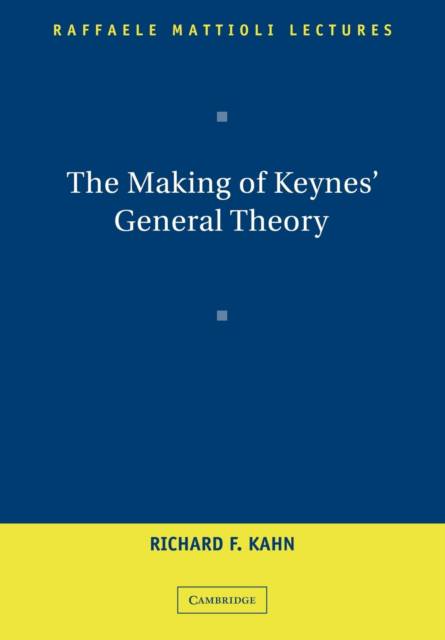
This 1984 book describes the development of thought, both of Keynes and others, culminating in the publication in 1936 of Keynes' General Theory of Employment, Interest and Money. As one of Keynes' close collaborators - from December 1929, when the writing of the Treatise was nearing its completion - Richard Khan provides a uniquely insightful analysis of these events. The author starts with a brief survey of the contributions influential in forming Keynes' early ideas, and moves on to explore the significance of the Quantity Theory of Money, and traces the development of Keynes' attitude towards the theory through his published books. Subsequent lectures are devoted to Keynes' Treatise on Money, and to his more popular writings as an economic adviser which marked the transition from the thinking in the Treatise to that in the General Theory which the author critically examines. The final lecture records the author's memory of his personal relationship with Keynes.
Specificaties
Betrokkenen
- Auteur(s):
- Uitgeverij:
Inhoud
- Aantal bladzijden:
- 336
- Taal:
- Engels
- Reeks:
Eigenschappen
- Productcode (EAN):
- 9780521189750
- Verschijningsdatum:
- 3/03/2011
- Uitvoering:
- Paperback
- Formaat:
- Trade paperback (VS)
- Afmetingen:
- 170 mm x 244 mm
- Gewicht:
- 535 g


Alleen bij Standaard Boekhandel
+ 172 punten op je klantenkaart van Standaard Boekhandel
Cadeau

AANGERADEN


Beoordelingen
We publiceren alleen reviews die voldoen aan de voorwaarden voor reviews. Bekijk onze voorwaarden voor reviews.