


- Afhalen na 1 uur in een winkel met voorraad
- Gratis thuislevering in België vanaf € 30
- Ruim aanbod met 7 miljoen producten
- Afhalen na 1 uur in een winkel met voorraad
- Gratis thuislevering in België vanaf € 30
- Ruim aanbod met 7 miljoen producten




Omschrijving
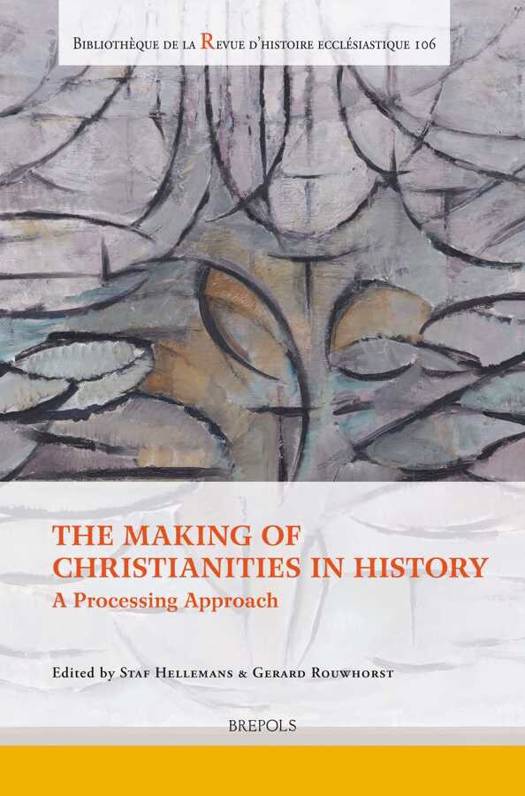
There has been a major trend among social scientists and historians to assume that the history of modernity can be studied without taking into consideration religion as an important factor. This in contrast to premodern societies in which religion would have played such a predominant and all-embracing role that a total symbiosis between religion and society would have existed. Both of these views are challenged by the authors of this volume. They claim that neither of them does justice to the complexity of the relationship between society and religion. They propose a theoretical framework that fully addresses this complexity by focussing on the variegated active ways in which religious agents (groups and individuals) process(ed) their societal and religious contexts in the modern era as well as in the premodern period. Viewed from this perspective, the history of Christianity appears as the heterogeneous result of an ongoing and unceasing selective processing by all Christians - and non-Christians - of their environment. The application of this new theoretical and methodological framework sheds light - often in a surprising and unexpected way - on various processes in the history of Christianity: the conflict-ridden parting of the ways between Jews and Christians; the emergence and development of early Christian rituals; the formation of a Cathar Counter- Church; the emergence of new forms of Christianity in North America; the complicated and ambiguous evolution of Roman Catholicism in modernity.
Specificaties
Betrokkenen
- Auteur(s):
- Uitgeverij:
Inhoud
- Aantal bladzijden:
- 230
- Taal:
- Engels
- Reeks:
- Reeksnummer:
- nr. 106
Eigenschappen
- Productcode (EAN):
- 9782503587813
- Verschijningsdatum:
- 9/11/2020
- Uitvoering:
- Paperback
- Formaat:
- Trade paperback (VS)
- Afmetingen:
- 155 mm x 231 mm
- Gewicht:
- 439 g


Alleen bij Standaard Boekhandel
+ 148 punten op je klantenkaart van Standaard Boekhandel
Cadeau

AANGERADEN


Beoordelingen
We publiceren alleen reviews die voldoen aan de voorwaarden voor reviews. Bekijk onze voorwaarden voor reviews.