


- Afhalen na 1 uur in een winkel met voorraad
- Gratis thuislevering in België vanaf € 30
- Ruim aanbod met 7 miljoen producten
- Afhalen na 1 uur in een winkel met voorraad
- Gratis thuislevering in België vanaf € 30
- Ruim aanbod met 7 miljoen producten





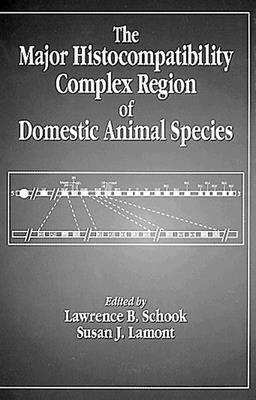
The Major Histocompatibility Complex Region of Domestic Animal Species
Lawrence B Schook, Susan J Lamont
€ 216,45
+ 432 punten
Omschrijving
The major histocompatibility complex (Mhc) is one of the few identified gene systems in domestic animals that is associated with quantitative traits such as disease resistance, immune response, growth, and reproduction. As knowledge of this important system increases, we move closer toward the reality of genetic enhancement of animal welfare and production efficiency. This book represents the current state of knowledge on the Mhc of agriculturally important animals and explores the latest advances in technology. For the first time, the unique findings of recent Mhc research are presented in a single source. The Major Histocompatibility Complex Region of Domestic Animal Species begins with a discussion of the evolution of Mhc. The chapters are then organized with respect to specific species, with a chapter devoted to each. The Mhc of mice and humans are used as a common reference for comparisons between diverse species. The text concludes with a look at future strategies and directions in Mhc research. Comparative immunologists and geneticists, veterinarians, animal breeders, researchers, and university and postgraduate students will all benefit from this detailed look at the evolution, structure, and organization of Mhc.
Specificaties
Betrokkenen
- Auteur(s):
- Uitgeverij:
Inhoud
- Aantal bladzijden:
- 334
- Taal:
- Engels
- Reeks:
Eigenschappen
- Productcode (EAN):
- 9780849380327
- Verschijningsdatum:
- 28/08/1996
- Uitvoering:
- Hardcover
- Formaat:
- Genaaid
- Afmetingen:
- 156 mm x 233 mm
- Gewicht:
- 637 g


Alleen bij Standaard Boekhandel
+ 432 punten op je klantenkaart van Standaard Boekhandel
Cadeau

AANGERADEN


Beoordelingen
We publiceren alleen reviews die voldoen aan de voorwaarden voor reviews. Bekijk onze voorwaarden voor reviews.