


- Afhalen na 1 uur in een winkel met voorraad
- Gratis thuislevering in België vanaf € 30
- Ruim aanbod met 7 miljoen producten
- Afhalen na 1 uur in een winkel met voorraad
- Gratis thuislevering in België vanaf € 30
- Ruim aanbod met 7 miljoen producten





€ 51,45
+ 102 punten
Omschrijving
Uncertain of their son's fate, his family leaped into action.
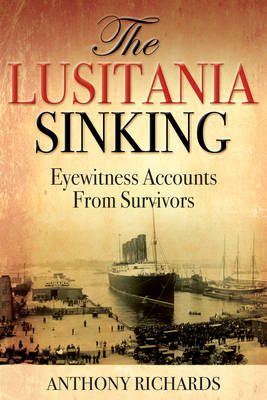
The sinking of the passenger liner Lusitania was a maritime disaster that may have changed the course of history by making American involvement in World War I almost inevitable. This part of the story has been told before but here, for the first time, The Lusitania Sinking has a far more personal tale to tell, of a family looking for information on their son's death.
On 1 May 1915 Preston Prichard, a 29-year-old student, embarked as a second-class passenger on the Lusitania, bound from New York for Liverpool. Just after 2 p.m. on 7 May, a single torpedo, fired by the German submarine U-20, caused a massive explosion in the Lusitania's hold, and the ship began sinking rapidly. Within 20 minutes she disappeared and 1,198 men, women and children, including Preston, died.
Preston's mother wrote hundreds of letters to survivors to find out more about what might have happened in his last moments. The replies she received included an extensive selection of moving and evocative survivors' accounts. Although this was not Mrs Prichard's intention, she thus assembled an outstanding collection of vivid first-hand recollections. The Lusitania Sinking tells the story of this tragedy using this previously unseen historical treasure trove.
The sinking of the passenger liner Lusitania was a maritime disaster that may have changed the course of history by making American involvement in World War I almost inevitable. This part of the story has been told before but here, for the first time, The Lusitania Sinking has a far more personal tale to tell, of a family looking for information on their son's death.
On 1 May 1915 Preston Prichard, a 29-year-old student, embarked as a second-class passenger on the Lusitania, bound from New York for Liverpool. Just after 2 p.m. on 7 May, a single torpedo, fired by the German submarine U-20, caused a massive explosion in the Lusitania's hold, and the ship began sinking rapidly. Within 20 minutes she disappeared and 1,198 men, women and children, including Preston, died.
Preston's mother wrote hundreds of letters to survivors to find out more about what might have happened in his last moments. The replies she received included an extensive selection of moving and evocative survivors' accounts. Although this was not Mrs Prichard's intention, she thus assembled an outstanding collection of vivid first-hand recollections. The Lusitania Sinking tells the story of this tragedy using this previously unseen historical treasure trove.
Specificaties
Betrokkenen
- Auteur(s):
- Uitgeverij:
Inhoud
- Aantal bladzijden:
- 224
- Taal:
- Engels
Eigenschappen
- Productcode (EAN):
- 9781459743489
- Verschijningsdatum:
- 1/10/2019
- Uitvoering:
- Hardcover
- Formaat:
- Genaaid
- Afmetingen:
- 165 mm x 234 mm
- Gewicht:
- 544 g


Alleen bij Standaard Boekhandel
+ 102 punten op je klantenkaart van Standaard Boekhandel
Cadeau

AANGERADEN


Beoordelingen
We publiceren alleen reviews die voldoen aan de voorwaarden voor reviews. Bekijk onze voorwaarden voor reviews.