


- Afhalen na 1 uur in een winkel met voorraad
- Gratis thuislevering in België vanaf € 30
- Ruim aanbod met 7 miljoen producten
- Afhalen na 1 uur in een winkel met voorraad
- Gratis thuislevering in België vanaf € 30
- Ruim aanbod met 7 miljoen producten





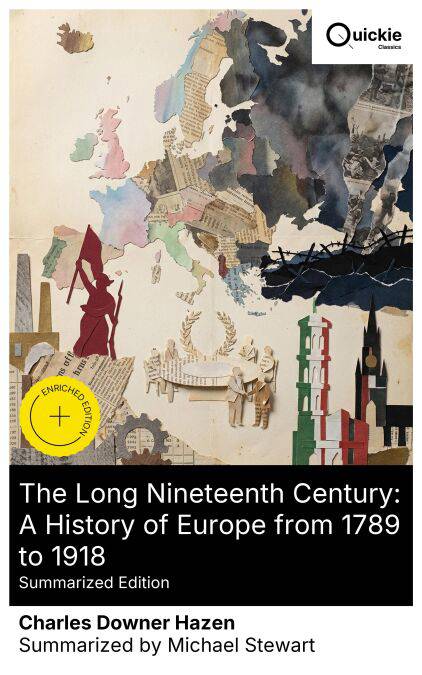
The Long Nineteenth Century: A History of Europe from 1789 to 1918 (Summarized Edition) E-BOOK
Enriched edition. From Revolution to War: Congress, 1848, Unification, Imperialism, and Europe's Transformation
Charles Downer Hazen
E-book | Engels
€ 1,99
+ 1 punten
Omschrijving
Spanning from the French Revolution of 1789 to the armistice of 1918, The Long Nineteenth Century traces Europe's passage from ancien régime to mass politics. Hazen integrates statecraft with social and economic change—industrialization, nationalism, liberalism, imperialism—within a lucid chronological arc: the Congress system, 1848, Italian and German unifications, fin‑de‑siècle tensions, and the slide to war. In sober, didactic prose typical of early twentieth‑century syntheses, narrative and analysis are kept in judicious balance. Charles Downer Hazen, an American historian writing in the shadow of the Great War, combined classroom clarity with a diplomatist's eye. His experience of 1914–1918 and long engagement with European political history impelled him to explain how revolutionary ideals, institutions, and power politics interacted from Napoleon to the collapse of empires. Recommended to students and general readers seeking a coherent survey, and to scholars interested in historiography, this book provides a reliable map of Europe's modern transformation. Read it for its crisp exposition, careful periodization, and causal argumentation, and as a springboard to later social, cultural, and transnational reinterpretations.
Quickie Classics summarizes timeless works with precision, preserving the author's voice and keeping the prose clear, fast, and readable—distilled, never diluted. Enriched Edition extras: Introduction · Synopsis · Historical Context · Brief Analysis · 4 Reflection Q&As · Editorial Footnotes.
Quickie Classics summarizes timeless works with precision, preserving the author's voice and keeping the prose clear, fast, and readable—distilled, never diluted. Enriched Edition extras: Introduction · Synopsis · Historical Context · Brief Analysis · 4 Reflection Q&As · Editorial Footnotes.
Specificaties
Betrokkenen
- Auteur(s):
- Uitgeverij:
Inhoud
- Aantal bladzijden:
- 202
- Taal:
- Engels
Eigenschappen
- Productcode (EAN):
- 8596547878353
- Verschijningsdatum:
- 9/01/2026
- Uitvoering:
- E-book
- Beveiligd met:
- Digital watermarking
- Formaat:
- ePub



Alleen bij Standaard Boekhandel
+ 1 punten op je klantenkaart van Standaard Boekhandel
CADEAU

AANGERADEN


Beoordelingen
We publiceren alleen reviews die voldoen aan de voorwaarden voor reviews. Bekijk onze voorwaarden voor reviews.