



Bedankt voor het vertrouwen het afgelopen jaar! Om jou te bedanken bieden we GRATIS verzending (in België) aan op alles gedurende de hele maand januari.
- Afhalen na 1 uur in een winkel met voorraad
- Gratis thuislevering in België vanaf € 30
- Ruim aanbod met 7 miljoen producten
Bedankt voor het vertrouwen het afgelopen jaar! Om jou te bedanken bieden we GRATIS verzending (in België) aan op alles gedurende de hele maand januari.
- Afhalen na 1 uur in een winkel met voorraad
- Gratis thuislevering in België vanaf € 30
- Ruim aanbod met 7 miljoen producten





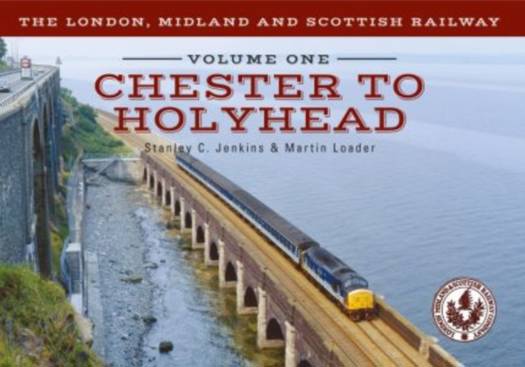
The London, Midland and Scottish Railway Volume One Chester to Holyhead
Stanley C Jenkins, Martin Loader
€ 23,95
+ 47 punten
Omschrijving
The Chester & Holyhead Railway was incorporated by an Act of Parliament in 1844, and the promoters were thereby empowered to build an 85-mile line along the North Wales coast, the engineer for the line being Robert Stephenson. The C&HR was, from its inception, intended to form part of a rail link between London and Dublin - the assumption being that such a line would improve the economic position of Ireland, while at the same time binding it ever more closely to the rest of the United Kingdom. In engineering terms, the C&HR presented huge challenges. The first 45 miles would follow an easy route alongside the Dee Estuary, but at Conwy the railway would have to cross a tidal river. The line would then be carried past the great towering headland at Penmaenmawr, while to the west of Bangor, the Menai Straits would have to be spanned by a bridge large enough to clear the masts of the largest vessels. The railway was completed by 1850 and, since that time, it has fulfilled its primary role as an artery of communication between England, Wales and Ireland.
Specificaties
Betrokkenen
- Auteur(s):
- Uitgeverij:
Inhoud
- Aantal bladzijden:
- 128
- Taal:
- Engels
- Reeks:
- Reeksnummer:
- nr. 1
Eigenschappen
- Productcode (EAN):
- 9781445643892
- Verschijningsdatum:
- 15/03/2015
- Uitvoering:
- Paperback
- Formaat:
- Trade paperback (VS)
- Afmetingen:
- 246 mm x 168 mm
- Gewicht:
- 419 g


Alleen bij Standaard Boekhandel
+ 47 punten op je klantenkaart van Standaard Boekhandel
CADEAU


Beoordelingen
We publiceren alleen reviews die voldoen aan de voorwaarden voor reviews. Bekijk onze voorwaarden voor reviews.