


- Afhalen na 1 uur in een winkel met voorraad
- Gratis thuislevering in België vanaf € 30
- Ruim aanbod met 7 miljoen producten
- Afhalen na 1 uur in een winkel met voorraad
- Gratis thuislevering in België vanaf € 30
- Ruim aanbod met 7 miljoen producten





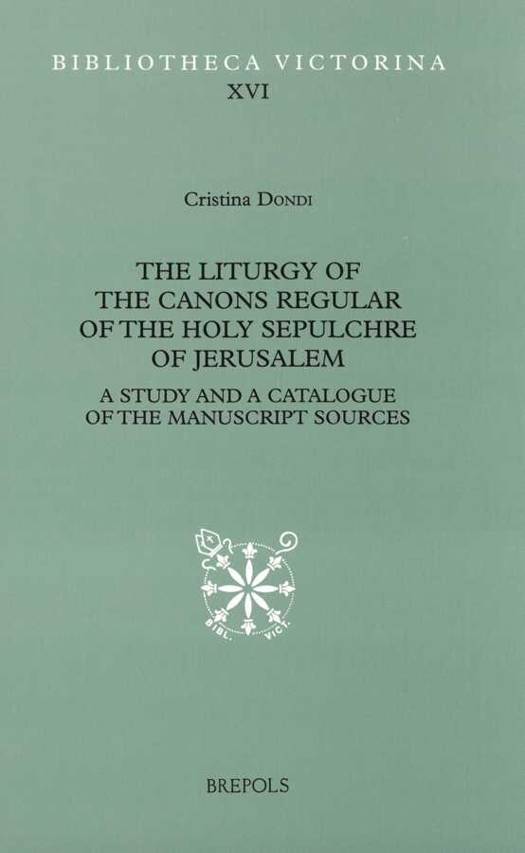
The Liturgy of the Canons Regular of the Holy Sepulchre of Jerusalem
A Study and a Catalogue of the Manuscript Sources
C Dondi
€ 58,30
+ 116 punten
Omschrijving
The liturgy of the Holy Sepulchre is the use created by the Latin Catholics who settled in Jerusalem as a result of the first crusade, in 1099. It originated within the cathedral church of the Holy Sepulchre, the patriarchal see, and it was consequently adopted by most of the religious institutions within the patriarchate. Although completely western, it does not follow the liturgical use practised in any single western diocese. Dr Dondi traces its individual components from diverse western sources, showing how the liturgy of the Holy Sepulchre has a composite nature. There are no narrative or legislative records that shed light on when or by whom or how this new liturgical use was created: only through examination of the surviving liturgical manuscripts has it been possible to answer these questions. This study analyses the characteristics of the liturgy of the Holy Sepulchre and, most importantly, identifies its western sources through a method of comparative liturgy drawing on the widest range of western liturgical uses. It shows the process through which liturgical elements from Bayeux, Evreux, Paris, and Chartres were incorporated as constituent parts of the liturgy of the Holy Sepulchre, providing new evidence for our understanding of the ecclesiastical organisation of Latin Jerusalem and Antioch. When liturgical borrowings are seen in their historical context, it becomes possible to identify some of the people most responsible for the liturgy's development. The work includes a descriptive catalogue of the 18 liturgical manuscripts of the holy Sepulchre, produced and used in Jerusalem, Acre, Caesarea, Tyre, Antioch, and Cyprus.
Specificaties
Betrokkenen
- Auteur(s):
- Uitgeverij:
Inhoud
- Aantal bladzijden:
- 344
- Taal:
- Engels
- Reeks:
- Reeksnummer:
- nr. 16
Eigenschappen
- Productcode (EAN):
- 9782503514222
- Verschijningsdatum:
- 23/03/2004
- Uitvoering:
- Hardcover
- Formaat:
- Genaaid
- Gewicht:
- 851 g


Alleen bij Standaard Boekhandel
+ 116 punten op je klantenkaart van Standaard Boekhandel
Cadeau

AANGERADEN


Beoordelingen
We publiceren alleen reviews die voldoen aan de voorwaarden voor reviews. Bekijk onze voorwaarden voor reviews.