


- Afhalen na 1 uur in een winkel met voorraad
- Gratis thuislevering in België vanaf € 30
- Ruim aanbod met 7 miljoen producten
- Afhalen na 1 uur in een winkel met voorraad
- Gratis thuislevering in België vanaf € 30
- Ruim aanbod met 7 miljoen producten





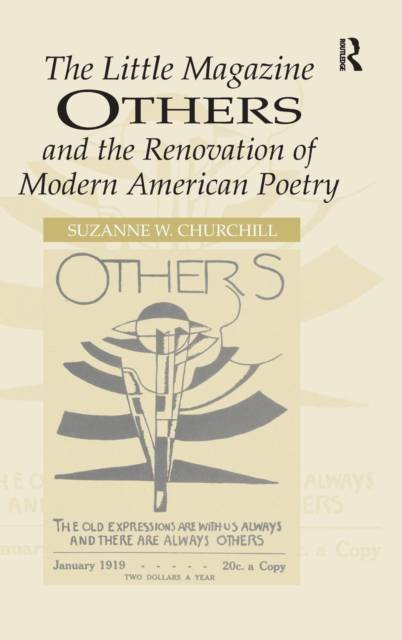
The Little Magazine Others and the Renovation of Modern American Poetry
Suzanne W Churchill
Hardcover | Engels
€ 80,95
+ 161 punten
Omschrijving
Others, an important and neglected little magazine, finally receives the attention it deserves in Churchill's superbly crafted study. In Churchill's discussions of Mina Loy, Marianne Moore, and William Carlos Williams, among others, Others serves as a framework for reassessing the scope and significance of modernist formalism. This book is an important contribution to the fields of American poetry and poetics, gender studies, queer theory, and cultural studies.
Specificaties
Betrokkenen
- Auteur(s):
- Uitgeverij:
Inhoud
- Aantal bladzijden:
- 304
- Taal:
- Engels
Eigenschappen
- Productcode (EAN):
- 9780754653325
- Verschijningsdatum:
- 28/07/2006
- Uitvoering:
- Hardcover
- Formaat:
- Genaaid
- Afmetingen:
- 156 mm x 234 mm
- Gewicht:
- 603 g


Alleen bij Standaard Boekhandel
+ 161 punten op je klantenkaart van Standaard Boekhandel
Cadeau

AANGERADEN


Beoordelingen
We publiceren alleen reviews die voldoen aan de voorwaarden voor reviews. Bekijk onze voorwaarden voor reviews.