


- Afhalen na 1 uur in een winkel met voorraad
- Gratis thuislevering in België vanaf € 30
- Ruim aanbod met 7 miljoen producten
- Afhalen na 1 uur in een winkel met voorraad
- Gratis thuislevering in België vanaf € 30
- Ruim aanbod met 7 miljoen producten





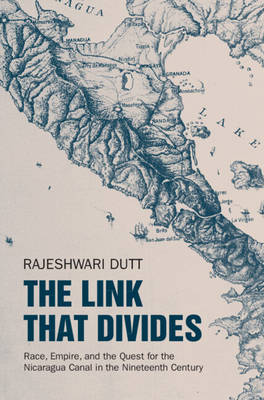
The Link That Divides
Race, Empire, and the Quest for the Nicaragua Canal in the Nineteenth Century
Rajeshwari Dutt
€ 144,45
+ 288 punten
Uitvoering
Eenvoudig bestellen
Veilig betalen


Gratis thuislevering vanaf € 30 (via bpost)
Gratis levering in je Standaard Boekhandel
Omschrijving
This important book illuminates the deeply intertwined histories of the Nicaragua Canal and the Afro-Indigenous Mosquito Coast, uncovering a compelling truth, long overshadowed by the triumphalist narrative of the Panama Canal. Focusing on British and US efforts to control the canal route through Nicaragua, Rajeshwari Dutt shows how imperial ambition, racial ideology, and local power struggles shaped one of Latin America's most contested infrastructure projects. She traces the role of racial language in imperial, colonial, and national agendas; the shifting dynamics of Anglo-American imperialism on the Mosquito Coast; and the violence embedded in the very pursuit of interoceanic connection. Methodologically, the book advances a practice of reading failure as a lens through which to understand the fragility of imperial projects and the contradictions that undermine their global ambitions. At its heart, The Link That Divides reveals a central paradox: that dreams of connection were built on - and undone by - the reality of division and exclusion.
Specificaties
Betrokkenen
- Auteur(s):
- Uitgeverij:
Inhoud
- Aantal bladzijden:
- 300
- Taal:
- Engels
- Reeks:
Eigenschappen
- Productcode (EAN):
- 9781009553322
- Verschijningsdatum:
- 19/03/2026
- Uitvoering:
- Hardcover
- Formaat:
- Genaaid
- Afmetingen:
- 152 mm x 229 mm
- Gewicht:
- 566 g


Alleen bij Standaard Boekhandel
+ 288 punten op je klantenkaart van Standaard Boekhandel
CADEAU

AANGERADEN


Beoordelingen
We publiceren alleen reviews die voldoen aan de voorwaarden voor reviews. Bekijk onze voorwaarden voor reviews.