


- Afhalen na 1 uur in een winkel met voorraad
- Gratis thuislevering in België vanaf € 30
- Ruim aanbod met 7 miljoen producten
- Afhalen na 1 uur in een winkel met voorraad
- Gratis thuislevering in België vanaf € 30
- Ruim aanbod met 7 miljoen producten





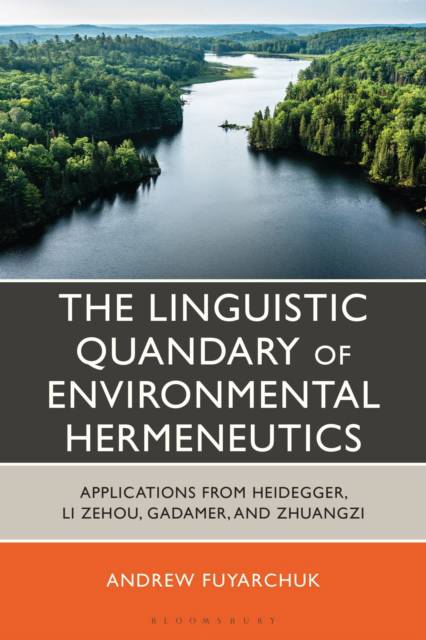
The Linguistic Quandary of Environmental Hermeneutics
Applications from Heidegger, Li Zehou, Gadamer, and Zhuangzi
Andrew Fuyarchuk
Hardcover | Engels
€ 195,45
+ 390 punten
Omschrijving
Within the context of the Age of the Anthropocene, this book outlines the existential preconditions for understanding the language of nature.
Andrew Fuyarchuk uses environmental hermeneutics as an example of a social conundrum, which is traced to the barriers created by Heidegger to understand animals-in-their environment. In response to these barriers, the author draws on the anthropological ontology of Li Zehou and Daoist philosophy. In contrast to the tradition of metaphysics that overshadows Heidegger, these philosophies think about humans and nature within a "one-world view" and thereby provide the conceptual resources to redefine what it means to be a human being from the domain of "being-in-nature." This entails a transformation in the meaning of existence that the author develops in terms of three Gadamerian dispositional preconditions for a hermeneutics of nature: empathetic bodily affinity, receptivity to ambient environments, and imitation as a way of knowing.
Andrew Fuyarchuk uses environmental hermeneutics as an example of a social conundrum, which is traced to the barriers created by Heidegger to understand animals-in-their environment. In response to these barriers, the author draws on the anthropological ontology of Li Zehou and Daoist philosophy. In contrast to the tradition of metaphysics that overshadows Heidegger, these philosophies think about humans and nature within a "one-world view" and thereby provide the conceptual resources to redefine what it means to be a human being from the domain of "being-in-nature." This entails a transformation in the meaning of existence that the author develops in terms of three Gadamerian dispositional preconditions for a hermeneutics of nature: empathetic bodily affinity, receptivity to ambient environments, and imitation as a way of knowing.
Specificaties
Betrokkenen
- Auteur(s):
- Uitgeverij:
Inhoud
- Aantal bladzijden:
- 214
- Taal:
- Engels
Eigenschappen
- Productcode (EAN):
- 9781666961096
- Verschijningsdatum:
- 8/01/2026
- Uitvoering:
- Hardcover
- Formaat:
- Genaaid
- Afmetingen:
- 152 mm x 229 mm
- Gewicht:
- 453 g



Alleen bij Standaard Boekhandel
+ 390 punten op je klantenkaart van Standaard Boekhandel
Cadeau

AANGERADEN


Beoordelingen
We publiceren alleen reviews die voldoen aan de voorwaarden voor reviews. Bekijk onze voorwaarden voor reviews.