


- Afhalen na 1 uur in een winkel met voorraad
- Gratis thuislevering in België vanaf € 30
- Ruim aanbod met 7 miljoen producten
- Afhalen na 1 uur in een winkel met voorraad
- Gratis thuislevering in België vanaf € 30
- Ruim aanbod met 7 miljoen producten





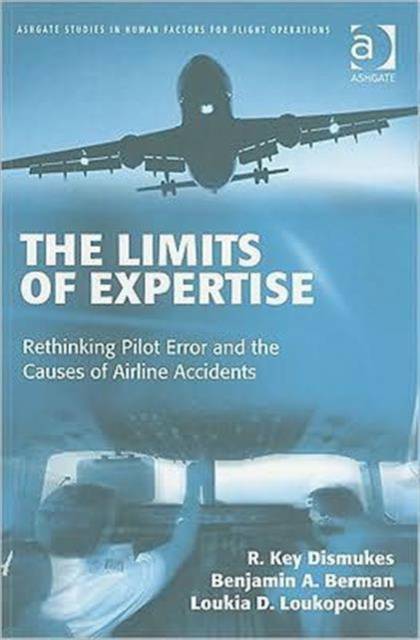
The Limits of Expertise
Rethinking Pilot Error and the Causes of Airline Accidents
R Key Dismukes, Benjamin A Berman, Loukia Loukopoulos
€ 108,45
+ 216 punten
Eenvoudig bestellen
Veilig betalen


Gratis thuislevering vanaf € 30 (via bpost)
Gratis levering in je Standaard Boekhandel
Omschrijving
Why would highly skilled, well-trained pilots make errors that lead to accidents when they had safely completed many thousands of previous flights? The majority of all aviation accidents are attributed primarily to human error, but this is often misinterpreted as evidence of lack of skill, vigilance, or conscientiousness of the pilots. The Limits of Expertise is a fresh look at the causes of pilot error and aviation accidents, arguing that accidents can be understood only in the context of how the overall aviation system operates. The authors analyzed in great depth the 19 major U.S. airline accidents from 1991-2000 in which the National Transportation Safety Board (NTSB) found crew error to be a causal factor. Each accident is reviewed in a separate chapter that examines events and crew actions and explores the cognitive processes in play at each step. The approach is guided by extensive evidence from cognitive psychology that human skill and error are opposite sides of the same coin. The book examines the ways in which competing task demands, ambiguity and organizational pressures interact with cognitive processes to make all experts vulnerable to characteristic forms of error. The final chapter identifies themes cutting across the accidents, discusses the role of chance, criticizes simplistic concepts of causality of accidents, and suggests ways to reduce vulnerability to these catastrophes. The authors' complementary experience allowed a unique approach to the study: accident investigation with the NTSB, cognitive psychology research both in the lab and in the field, enormous first-hand experience of piloting, and application of aviation psychology in both civil and military operations. This combination allowed the authors to examine and explain the domain-specific aspects of aviation operations and to extend advances in basic research in cognition to complex issues of human performance in the real world. Although The Limits of Expertise is directed to aviation operations, the implications are clear for understanding the decision processes, skilled performance and errors of professionals in many domains, including medicine.
Specificaties
Betrokkenen
- Auteur(s):
- Uitgeverij:
Inhoud
- Aantal bladzijden:
- 368
- Taal:
- Engels
- Reeks:
Eigenschappen
- Productcode (EAN):
- 9780754649656
- Verschijningsdatum:
- 12/01/2007
- Uitvoering:
- Paperback
- Formaat:
- Trade paperback (VS)
- Afmetingen:
- 155 mm x 231 mm
- Gewicht:
- 680 g


Alleen bij Standaard Boekhandel
+ 216 punten op je klantenkaart van Standaard Boekhandel
CADEAU

AANGERADEN


Beoordelingen
We publiceren alleen reviews die voldoen aan de voorwaarden voor reviews. Bekijk onze voorwaarden voor reviews.