


Bedankt voor het vertrouwen het afgelopen jaar! Om jou te bedanken bieden we GRATIS verzending (in België) aan op alles gedurende de hele maand januari.
- Afhalen na 1 uur in een winkel met voorraad
- In januari gratis thuislevering in België
- Ruim aanbod met 7 miljoen producten
Bedankt voor het vertrouwen het afgelopen jaar! Om jou te bedanken bieden we GRATIS verzending (in België) aan op alles gedurende de hele maand januari.
- Afhalen na 1 uur in een winkel met voorraad
- In januari gratis thuislevering in België
- Ruim aanbod met 7 miljoen producten





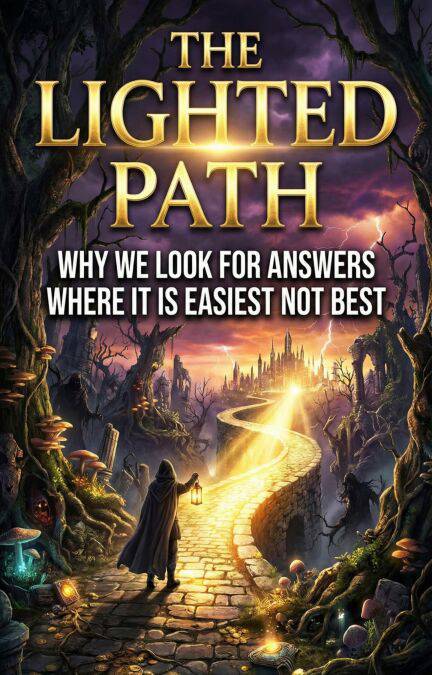
The Lighted Path E-BOOK
Why we look for answers where it is easiest not best
David Ray
E-book | Engels
€ 4,99
+ 4 punten
Omschrijving
"The Lighted Path – Why we look for answers where it is easiest not best" explores the "Streetlight Effect" (or the Drunkard's Search). The joke goes: A drunk man searches for his keys under a streetlight. A cop asks, "Did you lose them here?" The man replies, "No, I lost them in the park, but the light is better here."
Data scientist David Ray explains how this observational bias corrupts modern science, business, and medicine. We research topics where data is easy to find, rather than topics that are actually important. We measure GDP because it's countable, ignoring well-being because it's vague.
"The Lighted Path" challenges readers to step into the dark. It is a guide to asking the hard questions that don't have easy metrics, arguing that a rough answer to the right question is valuable, while a precise answer to the wrong question is useless.
Data scientist David Ray explains how this observational bias corrupts modern science, business, and medicine. We research topics where data is easy to find, rather than topics that are actually important. We measure GDP because it's countable, ignoring well-being because it's vague.
"The Lighted Path" challenges readers to step into the dark. It is a guide to asking the hard questions that don't have easy metrics, arguing that a rough answer to the right question is valuable, while a precise answer to the wrong question is useless.


Alleen bij Standaard Boekhandel
+ 4 punten op je klantenkaart van Standaard Boekhandel
SOLDEN


Beoordelingen
We publiceren alleen reviews die voldoen aan de voorwaarden voor reviews. Bekijk onze voorwaarden voor reviews.