


- Afhalen na 1 uur in een winkel met voorraad
- Gratis thuislevering in België vanaf € 30
- Ruim aanbod met 7 miljoen producten
- Afhalen na 1 uur in een winkel met voorraad
- Gratis thuislevering in België vanaf € 30
- Ruim aanbod met 7 miljoen producten





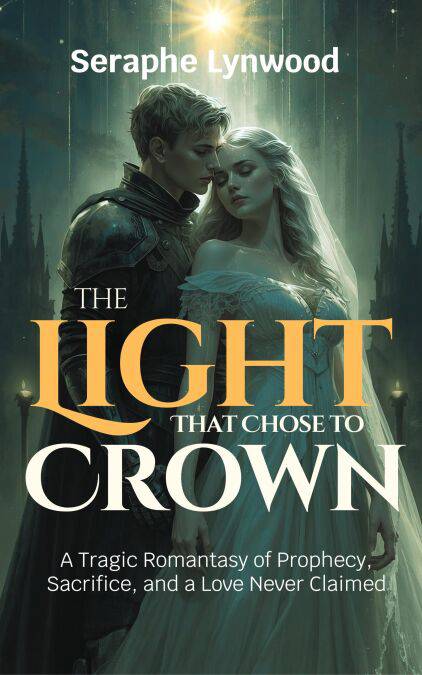
The Light That Chose to Burn: A Tragic Romantasy of Prophecy, Sacrifice, and a Love Never Claimed E-BOOK
Seraphe Lynwood
E-book | Engels
€ 3,49
+ 3 punten
Eenvoudig bestellen
Veilig betalen


Onmiddellijk geleverd via e-mail
Omschrijving
The Light That Chose to Burn is a dark romantic fantasy about a miracle the world celebrates—and the bodies that must endure it.
The kingdom remembers survival as proof. It remembers victories that arrive too late to be clean, crowns secured by prophecy, and order restored through ritual that demands belief rather than understanding. It remembers the knight who returns from wounds that should have ended him, standing upright when the world expects collapse, his continued breath taken as confirmation that the system works.
What it does not remember is the cost.
Caelum Valcor is trained to believe in structure: cause and effect, discipline, duty performed correctly. His life has been shaped by the idea that endurance requires no explanation and survival is its own justification. When he begins to live through moments that should have broken him, he does not question it at first. Knights are not taught to ask how they are spared. They are taught to keep standing.
Elowen is shaped by prophecy and contained by it. Chosen not for who she is but for what her body can bear, she is folded into ceremony, rehearsed into stillness, and praised for a devotion that consumes more than it gives back. Where others speak of destiny and light, her body learns a different language—fatigue that arrives too quickly, heat that must be restrained, silence that becomes the only safe way to endure. She understands early what the world refuses to say aloud: miracles are never free.
As the kingdom moves efficiently around them—thrones unhesitating, rituals perfected, sacrifices justified by outcome—something quiet and dangerous forms between knight and chosen bride. Not romance as escape. Not love as promise. But an attachment born of proximity to loss, of shared restraint, of the unspoken agreement to protect one another from truths that could fracture what little stability remains. Their closeness does not comfort. It threatens. Because to need another person in a system built on consumption is to risk becoming visible.
This is a story where light is not gentle. It burns because it is asked to burn, because it is chosen to burn, because the world requires it to remain luminous long after its structure begins to fail. It is a story about duty that does not absolve, love that does not rescue, and sacrifice that is not rewarded with meaning.
The Light That Chose to Burn is not about saving the world.
It is about what the world accepts as payment—and what remains when the miracle is gone, but the breathing continues.
Specificaties
Betrokkenen
- Auteur(s):
- Uitgeverij:
Inhoud
- Taal:
- Engels
Eigenschappen
- Productcode (EAN):
- 9798232126636
- Verschijningsdatum:
- 16/01/2026
- Uitvoering:
- E-book
- Formaat:
- ePub


Alleen bij Standaard Boekhandel
+ 3 punten op je klantenkaart van Standaard Boekhandel
CADEAU

AANGERADEN


Beoordelingen
We publiceren alleen reviews die voldoen aan de voorwaarden voor reviews. Bekijk onze voorwaarden voor reviews.