


- Afhalen na 1 uur in een winkel met voorraad
- Gratis thuislevering in België vanaf € 30
- Ruim aanbod met 7 miljoen producten
- Afhalen na 1 uur in een winkel met voorraad
- Gratis thuislevering in België vanaf € 30
- Ruim aanbod met 7 miljoen producten





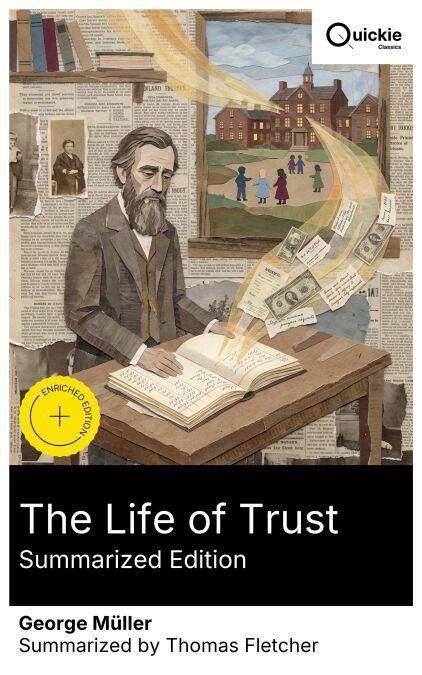
The Life of Trust (Summarized Edition) E-BOOK
Enriched edition. Prayer, Providence, and the Ashley Down Orphan Houses: Data and Doxology in a Victorian Experiment of Faith and Philanthropy
George Müller
E-book | Engels
€ 1,99
+ 1 punten
Omschrijving
The Life of Trust distills George Müller's long experiment in providence into an autobiographical record that is at once ledger, sermon, and Victorian case study. In spare, exacting prose, dated entries of need and provision pair doctrinal reflection on prayer with audited details—names, sums, meals, rents—for the Bristol orphan houses. Within nineteenth‑century evangelical autobiography, it converses with Augustine and Bunyan yet bears the empirical temper of its age, inviting scrutiny of method as much as devotion. Born in Prussia and converted while a theology student, Müller settled in England, where in 1834 he founded the Scriptural Knowledge Institution and soon began the Ashley Down orphan houses. Refusing debt or solicitation, he publicly tested his convictions by recording answers to prayer across decades. Pastoral work among emerging Brethren circles, a multilingual education, and later global preaching tours shaped a vocation that fused rigorous bookkeeping with an experiential doctrine of providence. For students of religious history, philanthropy, and devotional classics, this book offers both data and doxology. It rewards skeptics with method and believers with encouragement, clarifying charity's ethics amid industrial poverty. Read it to see disciplined trust reshape a city's care for children—and to test the audacity of prayer.
Quickie Classics summarizes timeless works with precision, preserving the author's voice and keeping the prose clear, fast, and readable—distilled, never diluted. Enriched Edition extras: Introduction · Synopsis · Historical Context · Brief Analysis · 4 Reflection Q&As · Editorial Footnotes.
Quickie Classics summarizes timeless works with precision, preserving the author's voice and keeping the prose clear, fast, and readable—distilled, never diluted. Enriched Edition extras: Introduction · Synopsis · Historical Context · Brief Analysis · 4 Reflection Q&As · Editorial Footnotes.
Specificaties
Betrokkenen
- Auteur(s):
- Uitgeverij:
Inhoud
- Aantal bladzijden:
- 131
- Taal:
- Engels
Eigenschappen
- Productcode (EAN):
- 8596547878346
- Verschijningsdatum:
- 9/01/2026
- Uitvoering:
- E-book
- Beveiligd met:
- Digital watermarking
- Formaat:
- ePub



Alleen bij Standaard Boekhandel
+ 1 punten op je klantenkaart van Standaard Boekhandel
AANGERADEN


Beoordelingen
We publiceren alleen reviews die voldoen aan de voorwaarden voor reviews. Bekijk onze voorwaarden voor reviews.