



Bedankt voor het vertrouwen het afgelopen jaar! Om jou te bedanken bieden we GRATIS verzending (in België) aan op alles gedurende de hele maand januari.
- Afhalen na 1 uur in een winkel met voorraad
- In januari gratis thuislevering in België
- Ruim aanbod met 7 miljoen producten
Bedankt voor het vertrouwen het afgelopen jaar! Om jou te bedanken bieden we GRATIS verzending (in België) aan op alles gedurende de hele maand januari.
- Afhalen na 1 uur in een winkel met voorraad
- In januari gratis thuislevering in België
- Ruim aanbod met 7 miljoen producten





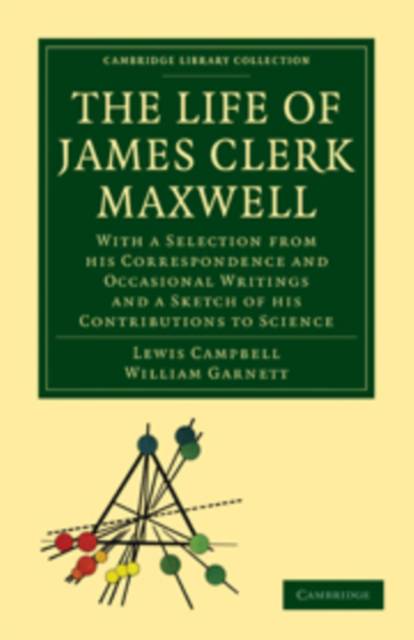
The Life of James Clerk Maxwell
With a Selection from his Correspondence and Occasional Writings and a Sketch of his Contributions to Science
Lewis Campbell, William Garnett, Campbell Lewis
€ 149,95
+ 299 punten
Uitvoering
Omschrijving
James Clerk Maxwell (1831-1879) was a Scottish physicist well-known for his extensive work with electromagnetism, colour analysis, and kinetic theory. Considered by many to be a giant in his field with significant influence on the physicists who would follow, Maxwell spent time as a professor at Aberdeen University, King's College, London, and Cambridge. This 1882 Life by his friend Lewis Campbell and natural philosopher William Garnett represents an important - and lengthy - investigation into Maxwell's life and thought. Part I is concerned with biographical matters while the second section focuses upon his scientific mind. A third part contains Maxwell's poetry, so included because the poems are 'characteristic of him' and have 'curious biographical interest'. At nearly 700 pages, the Life represents an important starting point for those curious about the state of theoretical physics and the person in whom it reached its culmination in the nineteenth century.
Specificaties
Betrokkenen
- Auteur(s):
- Uitgeverij:
Inhoud
- Aantal bladzijden:
- 704
- Taal:
- Engels
- Reeks:
Eigenschappen
- Productcode (EAN):
- 9781108013703
- Verschijningsdatum:
- 3/06/2010
- Uitvoering:
- Paperback
- Formaat:
- Trade paperback (VS)
- Afmetingen:
- 140 mm x 216 mm
- Gewicht:
- 879 g


Alleen bij Standaard Boekhandel
+ 299 punten op je klantenkaart van Standaard Boekhandel
SOLDEN


Beoordelingen
We publiceren alleen reviews die voldoen aan de voorwaarden voor reviews. Bekijk onze voorwaarden voor reviews.