


- Afhalen na 1 uur in een winkel met voorraad
- Gratis thuislevering in België vanaf € 30
- Ruim aanbod met 7 miljoen producten
- Afhalen na 1 uur in een winkel met voorraad
- Gratis thuislevering in België vanaf € 30
- Ruim aanbod met 7 miljoen producten





€ 178,45
+ 356 punten
Omschrijving
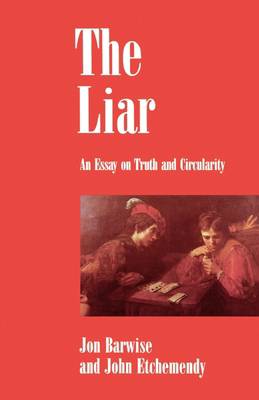
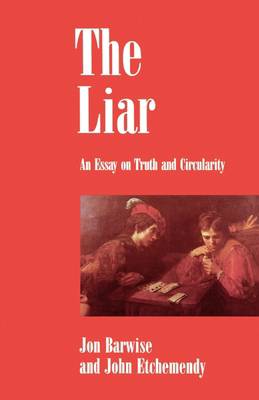
Bringing together powerful new tools from set theory and the philosophy of language, this book proposes a solution to one of the few unresolved paradoxes from antiquity, the Paradox of the Liar. Treating truth as a property of propositions, not sentences, the authors model two distinct conceptions of propositions: one based on the standard notion used by Bertrand Russell, among others, and the other based on J.L. Austin's work on truth. Comparing these two accounts, the authors show that while the Russellian conception of the relation between sentences, propositions, and truth is crucially flawed in limiting cases, the Austinian perspective has fruitful applications to the analysis of semantic paradox. In the course of their study of a language admitting circular reference and containing its own truth predicate, Barwise and Etchemendy also develop a wide range of model-theoretic techniques--based on a new set-theoretic tool, Peter Aczel's theory of hypersets--that open up new avenues in logical and formal semantics.
Specificaties
Betrokkenen
- Auteur(s):
- Uitgeverij:
Inhoud
- Aantal bladzijden:
- 208
- Taal:
- Engels
Eigenschappen
- Productcode (EAN):
- 9780195059441
- Verschijningsdatum:
- 6/04/1989
- Uitvoering:
- Paperback
- Formaat:
- Trade paperback (VS)
- Afmetingen:
- 139 mm x 208 mm
- Gewicht:
- 254 g


Alleen bij Standaard Boekhandel
+ 356 punten op je klantenkaart van Standaard Boekhandel
Cadeau

AANGERADEN


Beoordelingen
We publiceren alleen reviews die voldoen aan de voorwaarden voor reviews. Bekijk onze voorwaarden voor reviews.