


- Afhalen na 1 uur in een winkel met voorraad
- Gratis thuislevering in België vanaf € 30
- Ruim aanbod met 7 miljoen producten
- Afhalen na 1 uur in een winkel met voorraad
- Gratis thuislevering in België vanaf € 30
- Ruim aanbod met 7 miljoen producten





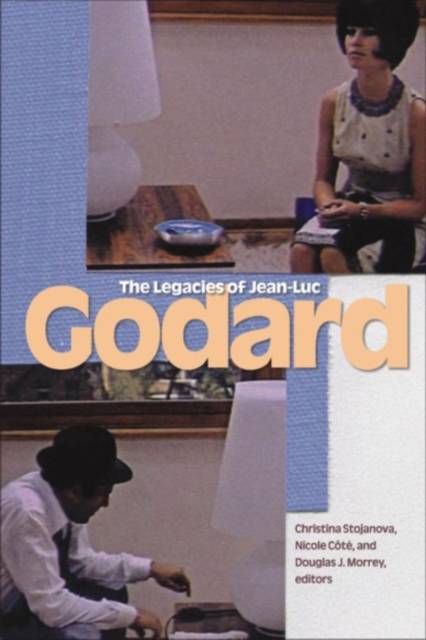
The Legacies of Jean-Luc Godard
€ 88,95
+ 177 punten
Omschrijving
The artistic impact of Jean-Luc Godard, whose career in cinema has spanned over fifty years and yielded a hundred or more discrete works in different media cannot be overestimated, not only on French and other world cinemas, but on fields as diverse as television, video art, gallery installation, philosophy, music, literature, and dance. The Legacies of Jean-Luc Godard marks an initial attempt to map the range and diversity of Godard's impact across these different fields. It contains reassessments of key films like Vivre sa vie and Passion as well as considerations of Godard's influence over directors like Christophe Honoré. Contributors look at Godard's relation to philosophy and influence over film philosophy through reference to Wittgenstein, Deleuze, and Cavell, and show how Godard's work in cinema interacts with other arts, such as painting, music, and dance. They suggest that Godard's late work makes important contributions to debates in memory and Holocaust Studies. The volume will appeal to a non-specialist audience with its discussions of canonical films and treatment of themes popular within film studies programs such as cinema and ethics. But it will also attract academic specialists on Godard with its chapters on recent works, including Dans le noir du temps (2002) and Voyage(s) en utopie (2006), interventions in long-running academic debates (Godard, the Holocaust, and anti- Semitism), and treatment of rarely discussed areas of Godard's work (choreographed movement).
Specificaties
Betrokkenen
- Uitgeverij:
Inhoud
- Aantal bladzijden:
- 274
- Taal:
- Engels
- Reeks:
Eigenschappen
- Productcode (EAN):
- 9781554589203
- Verschijningsdatum:
- 13/01/2014
- Uitvoering:
- Paperback
- Formaat:
- Trade paperback (VS)
- Afmetingen:
- 152 mm x 226 mm
- Gewicht:
- 385 g


Alleen bij Standaard Boekhandel
+ 177 punten op je klantenkaart van Standaard Boekhandel
Cadeau

AANGERADEN


Beoordelingen
We publiceren alleen reviews die voldoen aan de voorwaarden voor reviews. Bekijk onze voorwaarden voor reviews.