



Bedankt voor het vertrouwen het afgelopen jaar! Om jou te bedanken bieden we GRATIS verzending (in België) aan op alles gedurende de hele maand januari.
- Afhalen na 1 uur in een winkel met voorraad
- In januari gratis thuislevering in België
- Ruim aanbod met 7 miljoen producten
Bedankt voor het vertrouwen het afgelopen jaar! Om jou te bedanken bieden we GRATIS verzending (in België) aan op alles gedurende de hele maand januari.
- Afhalen na 1 uur in een winkel met voorraad
- In januari gratis thuislevering in België
- Ruim aanbod met 7 miljoen producten





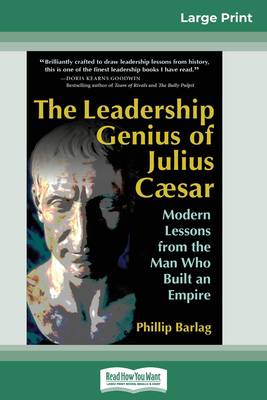
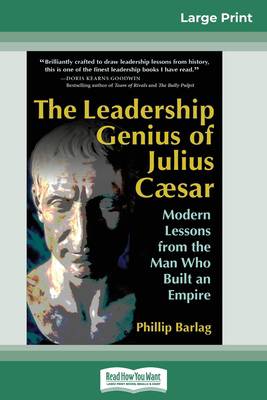
The Leadership Genius of Julius Caesar
Modern Lessons from the Man Who Built an Empire (16pt Large Print Edition)
Phillip Barlag
Paperback | Engels
€ 52,95
+ 105 punten
Uitvoering
Omschrijving
History is littered with examples of tyrants, hopelessly out of touch with the plight of the commoners, ruthlessly pursuing their own ambitions or hedonistic whims. But Caesar was a different kind of leader. Despite some bad press, in fact he never saw himself as above the average Roman citizen. Although he certainly knew he was an extraordinary human being, he also regarded himself as fundamentally one of the people, and acted like it. In his life and in his career, he created a new paradigm of leadership, and along the way, created the path to success for any leader in a complex organization. In a book that Doris Kearns Goodwin has called ''''brilliantly crafted to draw leadership lessons from history, '''' Philip Barlag uses dramatic and colorful incidents from Caesar's career to illustrate what modern leaders can learn from him. Central to Barlag's argument is the distinction between power and force. When leading his own organization, Caesar never used brute force to motivate his followers. Time and again he exercised a power rooted in his demonstrated personal integrity and his essentially egalitarian relationship with the Romans. People followed him because they wanted to, not because they were compelled to. Over 2000 years after Caesar's death this is still the kind of loyalty every leader wants to inspire. Barlag shows how anyone can lead like Caesar.
Specificaties
Betrokkenen
- Auteur(s):
- Uitgeverij:
Inhoud
- Aantal bladzijden:
- 192
- Taal:
- Engels
Eigenschappen
- Productcode (EAN):
- 9780369313492
- Verschijningsdatum:
- 17/10/2016
- Uitvoering:
- Paperback
- Formaat:
- Trade paperback (VS)
- Afmetingen:
- 156 mm x 234 mm
- Gewicht:
- 276 g


Alleen bij Standaard Boekhandel
+ 105 punten op je klantenkaart van Standaard Boekhandel
SOLDEN


Beoordelingen
We publiceren alleen reviews die voldoen aan de voorwaarden voor reviews. Bekijk onze voorwaarden voor reviews.