


- Afhalen na 1 uur in een winkel met voorraad
- Gratis thuislevering in België vanaf € 30
- Ruim aanbod met 7 miljoen producten
- Afhalen na 1 uur in een winkel met voorraad
- Gratis thuislevering in België vanaf € 30
- Ruim aanbod met 7 miljoen producten





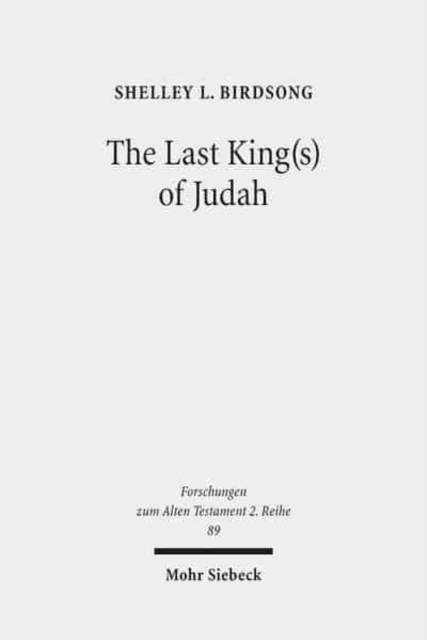
The Last King(s) of Judah
Zedekiah and Sedekias in the Hebrew and Old Greek Versions of Jeremiah 37(44):1-40(47):6
Shelley L Birdsong
€ 104,45
+ 208 punten
Omschrijving
Zedekiah ben Josiah was the last king of Judah, and under his leadership, in 586 BCE, Jerusalem was destroyed. Interestingly, the Hebrew and Old Greek versions of Jeremiah present very different portrayals of Zedekiah, prompting a variety of literary and historical-critical questions. In this study, Shelley Birdsong Long uses a multi-critical approach to highlight the two unique characterizations of Zedekiah and address their relationship text- and form-critically. She argues that the Greek text depicts Zedekiah as a manipulative and mysterious Machiavellian prince, whereas the Hebrew presents him as a hesitant and kind king, who metaphorically mirrors the fall of his capital. Following this literary comparison, the author employs several scholarly methods to substantiate the claim that the Hebrew text is a later edited text.
Specificaties
Betrokkenen
- Auteur(s):
- Uitgeverij:
Inhoud
- Aantal bladzijden:
- 255
- Taal:
- Engels
- Reeks:
- Reeksnummer:
- nr. 89
Eigenschappen
- Productcode (EAN):
- 9783161538889
- Verschijningsdatum:
- 1/02/2017
- Uitvoering:
- Paperback
- Formaat:
- Trade paperback (VS)
- Afmetingen:
- 154 mm x 230 mm
- Gewicht:
- 875 g


Alleen bij Standaard Boekhandel
+ 208 punten op je klantenkaart van Standaard Boekhandel
Cadeau

AANGERADEN


Beoordelingen
We publiceren alleen reviews die voldoen aan de voorwaarden voor reviews. Bekijk onze voorwaarden voor reviews.