


- Afhalen na 1 uur in een winkel met voorraad
- Gratis thuislevering in België vanaf € 30
- Ruim aanbod met 7 miljoen producten
- Afhalen na 1 uur in een winkel met voorraad
- Gratis thuislevering in België vanaf € 30
- Ruim aanbod met 7 miljoen producten





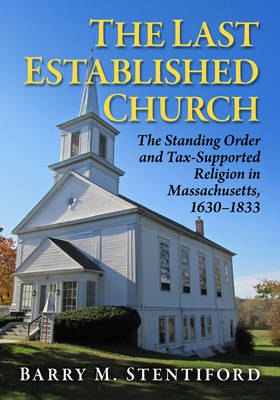
The Last Established Church
The Standing Order and Tax-Supported Religion in Massachusetts, 1630-1833
Barry M Stentiford
Paperback | Engels
€ 93,45
+ 186 punten
Omschrijving
Most Americans find beyond credible the idea that some New England states maintained taxpayer supported churches for decades after the Revolution. While almost every American understands that New England was founded by Puritans, few understand the linkage between the Puritans of history and modern Congregational churches. These shortcomings in the common understanding of the history of religion in America and New England suggested the need for a succinct work to fill the gaps.
This book explains the role of Congregationalism in the political structure and culture of New England from initial settlement into the early Republic through tax-supported churches in what was called the Standing Order. It fills the gap in the historiography to show how Congregationalism lasted beyond the initial Puritan impulse as a central organizing institution in New England communities, and why that semi-official standing of Congregational churches in Massachusetts towns and parishes ended in 1833.
Specificaties
Betrokkenen
- Auteur(s):
- Uitgeverij:
Inhoud
- Aantal bladzijden:
- 214
- Taal:
- Engels
Eigenschappen
- Productcode (EAN):
- 9781476699479
- Verschijningsdatum:
- 20/01/2027
- Uitvoering:
- Paperback
- Formaat:
- Trade paperback (VS)
- Afmetingen:
- 178 mm x 254 mm


Alleen bij Standaard Boekhandel
+ 186 punten op je klantenkaart van Standaard Boekhandel
Cadeau

AANGERADEN


Beoordelingen
We publiceren alleen reviews die voldoen aan de voorwaarden voor reviews. Bekijk onze voorwaarden voor reviews.