


- Afhalen na 1 uur in een winkel met voorraad
- Gratis thuislevering in België vanaf € 30
- Ruim aanbod met 7 miljoen producten
- Afhalen na 1 uur in een winkel met voorraad
- Gratis thuislevering in België vanaf € 30
- Ruim aanbod met 7 miljoen producten





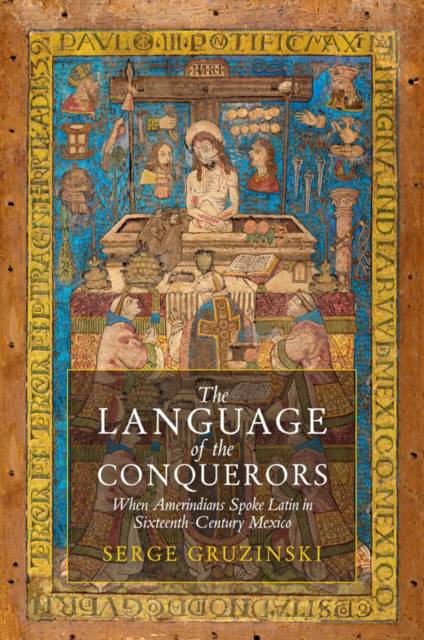
The Language of the Conquerors
When Amerindians Spoke Latin in Sixteenth-Century Mexico
Serge Gruzinski
Paperback | Engels
€ 50,45
+ 100 punten
Uitvoering
Omschrijving
One of the most decisive and irreversible consequences of the Spanish conquest of the Americas was the alphabetic revolution which changed the forms of communication in indigenous societies. Writing, paper and books arrived in the Americas with the conquistadors and they were used as weapons by the Spanish to subjugate local populations and impose Christianity on them.
The written word of the conquerors was a key medium of colonization: orders from the imperial metropole were written down, local resources and valuables were recorded and books conveyed knowledge coming from Europe. The children of indigenous elites, trained in humanist values, were soon more familiar with Latin and the Bible than with the beliefs of their ancestors, and the use of Latin instilled new modes of reasoning and thought. By imposing European languages and writing systems, the conquistadors also inculcated a belief in the superiority of the written word and even its holiness. And yet despite this, indigenous people were able to resist alphabetic colonization in other ways, thanks to their extraordinary creativity.
By putting language, writing and printing at the centre of his analysis, Serge Gruzinski develops a fresh perspective on the colonization and conversion of the indigenous people of the Americas and enables us to observe in detail how ideas intermingle when two civilizations collide.
Specificaties
Betrokkenen
- Auteur(s):
- Vertaler(s):
- Uitgeverij:
Inhoud
- Aantal bladzijden:
- 288
- Taal:
- Engels
Eigenschappen
- Productcode (EAN):
- 9781509565238
- Verschijningsdatum:
- 4/05/2026
- Uitvoering:
- Paperback
- Formaat:
- Trade paperback (VS)
- Afmetingen:
- 152 mm x 228 mm
- Gewicht:
- 417 g


Alleen bij Standaard Boekhandel
+ 100 punten op je klantenkaart van Standaard Boekhandel
Cadeau

AANGERADEN


Beoordelingen
We publiceren alleen reviews die voldoen aan de voorwaarden voor reviews. Bekijk onze voorwaarden voor reviews.