


- Afhalen na 1 uur in een winkel met voorraad
- Gratis thuislevering in België vanaf € 30
- Ruim aanbod met 7 miljoen producten
- Afhalen na 1 uur in een winkel met voorraad
- Gratis thuislevering in België vanaf € 30
- Ruim aanbod met 7 miljoen producten





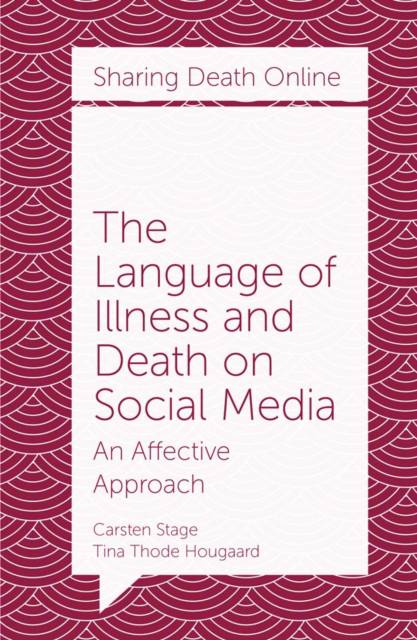
The Language of Illness and Death on Social Media
An Affective Approach
Carsten Stage, Tina Thode Hougaard
€ 109,95
+ 219 punten
Omschrijving
This book investigates the language created and used on social media to express and respond to personal experiences of illness, dying and mourning.
The authors begin by setting out the established and recent research on social and existential media, affect and language, before focusing on Facebook groups dealing with the illness and death of two Danish children. Through these in-depth case studies, they produce insights into different ways of engaging in affective processes related to illness and death on social media, and into both the ritualized and innovative vernacular vocabulary created through these encounters.
Developing an analytical framework for understanding the social role and logics of "affective language" (such as emojis, interjections and other forms of expressive interactive writing), The Language of Illness and Death on Social Media will be of great interest to all those striving to understand the affective importance and roles of language for sharing experiences of illness, death and commemoration in these spheres.
The authors begin by setting out the established and recent research on social and existential media, affect and language, before focusing on Facebook groups dealing with the illness and death of two Danish children. Through these in-depth case studies, they produce insights into different ways of engaging in affective processes related to illness and death on social media, and into both the ritualized and innovative vernacular vocabulary created through these encounters.
Developing an analytical framework for understanding the social role and logics of "affective language" (such as emojis, interjections and other forms of expressive interactive writing), The Language of Illness and Death on Social Media will be of great interest to all those striving to understand the affective importance and roles of language for sharing experiences of illness, death and commemoration in these spheres.
Specificaties
Betrokkenen
- Auteur(s):
- Uitgeverij:
Inhoud
- Aantal bladzijden:
- 152
- Taal:
- Engels
- Reeks:
Eigenschappen
- Productcode (EAN):
- 9781787694828
- Verschijningsdatum:
- 29/10/2018
- Uitvoering:
- Paperback
- Formaat:
- Trade paperback (VS)
- Afmetingen:
- 127 mm x 196 mm
- Gewicht:
- 158 g


Alleen bij Standaard Boekhandel
+ 219 punten op je klantenkaart van Standaard Boekhandel
AANGERADEN


Beoordelingen
We publiceren alleen reviews die voldoen aan de voorwaarden voor reviews. Bekijk onze voorwaarden voor reviews.