


- Afhalen na 1 uur in een winkel met voorraad
- Gratis thuislevering in België vanaf € 30
- Ruim aanbod met 7 miljoen producten
- Afhalen na 1 uur in een winkel met voorraad
- Gratis thuislevering in België vanaf € 30
- Ruim aanbod met 7 miljoen producten





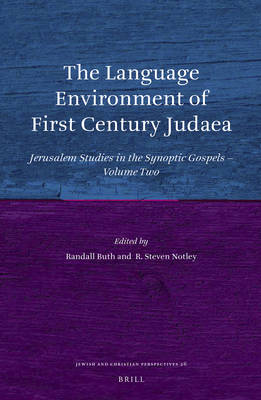
The Language Environment of First Century Judaea
Jerusalem Studies in the Synoptic Gospels--Volume Two
€ 341,95
+ 683 punten
Omschrijving
The articles in this collection demonstrate that a change is taking place in New Testament studies. Throughout the twentieth century, New Testament scholarship primarily worked under the assumption that only two languages, Aramaic and Greek, were in common use in the land of Israel in the first century. The current contributors investigate various areas where increasing linguistic data and changing perspectives have moved Hebrew out of a restricted, marginal status within first-century language use and the impact on New Testament studies. Five articles relate to the general sociolinguistic situation in the land of Israel during the first century, while three articles present literary studies that interact with the language background. The final three contributions demonstrate the impact this new understanding has on the reading of Gospel texts.
Specificaties
Betrokkenen
- Uitgeverij:
Inhoud
- Aantal bladzijden:
- 464
- Taal:
- Engels
- Reeks:
- Reeksnummer:
- nr. 26
Eigenschappen
- Productcode (EAN):
- 9789004263406
- Verschijningsdatum:
- 7/03/2014
- Uitvoering:
- Hardcover
- Formaat:
- Genaaid
- Afmetingen:
- 160 mm x 241 mm
- Gewicht:
- 839 g

Alleen bij Standaard Boekhandel
+ 683 punten op je klantenkaart van Standaard Boekhandel
Cadeau

AANGERADEN


Beoordelingen
We publiceren alleen reviews die voldoen aan de voorwaarden voor reviews. Bekijk onze voorwaarden voor reviews.