


- Afhalen na 1 uur in een winkel met voorraad
- Gratis thuislevering in België vanaf € 30
- Ruim aanbod met 7 miljoen producten
- Afhalen na 1 uur in een winkel met voorraad
- Gratis thuislevering in België vanaf € 30
- Ruim aanbod met 7 miljoen producten





€ 41,95
+ 83 punten
Uitvoering
Omschrijving
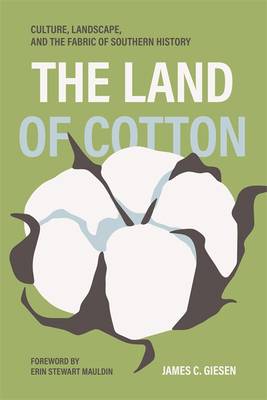
The Land of Cotton is a sweeping environmental and cultural history of cotton's power in the American South. More than the region's signature crop, cotton was a material, symbolic, economic, and ideological force. James. C. Giesen's central claim is that the culture of cotton--the ways planters, laborers, boosters, tourist boards, musicians, and a host of others representing the crop--shifted not only with the political moment but in response to the physical world. Cotton lands eroding and becoming forests, labor and technological upheaval, and the rise and fall of constructed environments all changed the rhetorical possibility of the thin white fiber. Cotton festivals, country songs, and sharecroppers' memories shaped and were shaped by the conditions of Southern landscapes. By grounding this history in two distinct Southern landscapes--the South Carolina Piedmont and the Mississippi Delta--Giesen reveals how these local conditions forged cotton's cultural power and practical uses. Spanning one-hundred-fifty years, this study shows how the South's most iconic crop remained a literal and figurative site for debates over environmental change, political ideology, and historical memory.
Specificaties
Betrokkenen
- Auteur(s):
- Uitgeverij:
Inhoud
- Aantal bladzijden:
- 264
- Taal:
- Engels
- Reeks:
Eigenschappen
- Productcode (EAN):
- 9780820377582
- Verschijningsdatum:
- 1/10/2026
- Uitvoering:
- Paperback
- Formaat:
- Trade paperback (VS)
- Afmetingen:
- 152 mm x 229 mm


Alleen bij Standaard Boekhandel
+ 83 punten op je klantenkaart van Standaard Boekhandel
Cadeau

AANGERADEN


Beoordelingen
We publiceren alleen reviews die voldoen aan de voorwaarden voor reviews. Bekijk onze voorwaarden voor reviews.