


- Afhalen na 1 uur in een winkel met voorraad
- Gratis thuislevering in België vanaf € 30
- Ruim aanbod met 7 miljoen producten
- Afhalen na 1 uur in een winkel met voorraad
- Gratis thuislevering in België vanaf € 30
- Ruim aanbod met 7 miljoen producten





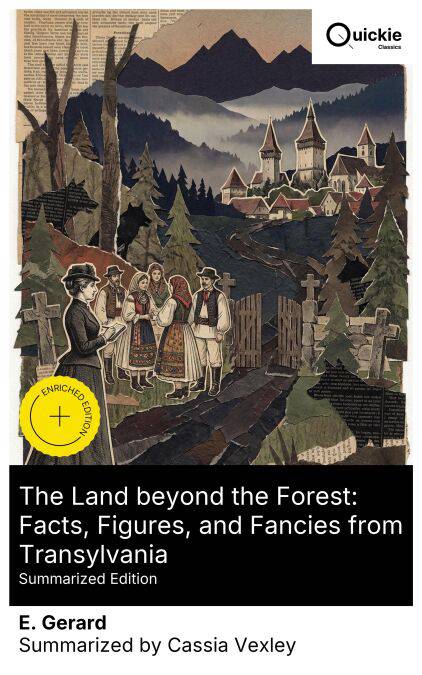
The Land beyond the Forest: Facts, Figures, and Fancies from Transylvania (Summarized Edition) E-BOOK
Enriched edition. Folklore, History, and Myth Across Transylvania's Enchanted Landscapes
E. Gerard
E-book | Engels
€ 0,49
Omschrijving
First published in 1888, The Land Beyond the Forest surveys Transylvania at the fringe of the Austro‑Hungarian realm. Gerard interleaves "facts, figures, and fancies": statistical notes on towns and trades; vivid passages on Carpathian passes and fortified Saxon churches; and clear accounts of customs among Romanians, Székelys, and Saxons. Pages on funeral rites, wolves, witches, strigoi, and the nosferatu—drawn from interviews—sit beside philological asides and cool observation. In the polished, ironic cadence of Victorian travel writing, the book straddles ethnography and romance and helped shape Dracula's imaginative ground. Emily Gerard, a Scottish novelist living in Transylvania during her husband's military posting, brought unusual access and languages to the task. Years among officials, priests, and village households furnished the fieldwork behind this book and her earlier essay "Transylvanian Superstitions." Writing with her sister as E. D. Gerard had honed narrative economy; here that craft is yoked to curiosity, yielding a record at once intimate and comparativist. Recommended to readers of folklore, borderland history, and Victorian travelogues, this volume rewards attention. While its outlook bears its era's assumptions, Gerard's noticing and ear for local story make it indispensable to scholars of Central Europe and anyone tracing Dracula's folkloric sources.
Quickie Classics summarizes timeless works with precision, preserving the author's voice and keeping the prose clear, fast, and readable—distilled, never diluted. Enriched Edition extras: Introduction · Synopsis · Historical Context · Brief Analysis · 4 Reflection Q&As · Editorial Footnotes.
Quickie Classics summarizes timeless works with precision, preserving the author's voice and keeping the prose clear, fast, and readable—distilled, never diluted. Enriched Edition extras: Introduction · Synopsis · Historical Context · Brief Analysis · 4 Reflection Q&As · Editorial Footnotes.
Specificaties
Betrokkenen
- Auteur(s):
- Uitgeverij:
Inhoud
- Aantal bladzijden:
- 153
- Taal:
- Engels
Eigenschappen
- Productcode (EAN):
- 8596547892380
- Verschijningsdatum:
- 2/04/2026
- Uitvoering:
- E-book
- Beveiligd met:
- Digital watermarking
- Formaat:
- ePub


Alleen bij Standaard Boekhandel
Cadeau

AANGERADEN


Beoordelingen
We publiceren alleen reviews die voldoen aan de voorwaarden voor reviews. Bekijk onze voorwaarden voor reviews.