


- Afhalen na 1 uur in een winkel met voorraad
- Gratis thuislevering in België vanaf € 30
- Ruim aanbod met 7 miljoen producten
- Afhalen na 1 uur in een winkel met voorraad
- Gratis thuislevering in België vanaf € 30
- Ruim aanbod met 7 miljoen producten





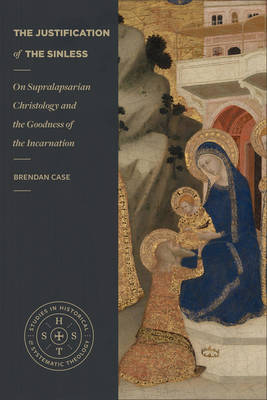
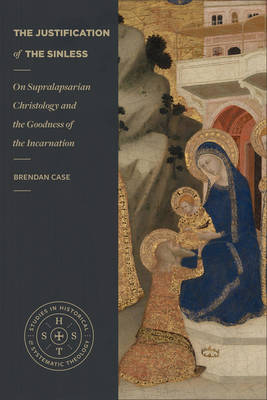
The Justification of the Sinless
On Supralapsarian Christology and the Goodness of the Incarnation
Brendan Case
€ 41,95
+ 83 punten
Omschrijving
Did God decide to save before he decided to create? Though this question is often considered abstract, its answer informs both the purpose and nature of the incarnation.
In The Justification of the Sinless, Brendan Case argues that God the Son would have become incarnate even if humanity had never sinned. The incarnation benefits creation in many ways besides redemption. Indeed, it is the ultimate reason for the creation of the cosmos itself.
Case develops his argument primarily by drawing upon the work of Robert Grosseteste (ca. 1168-1253). Though neglected today, this brilliant medieval theologian drove the 13th-century debates over the incarnation. Building on Grosseteste, Case provides a compelling set of exegetical and theological arguments for the supralapsarian thesis. If the incarnation is logically prior to the fall, then God always planned to endow creation with a glory beyond estimation.
In The Justification of the Sinless, Brendan Case argues that God the Son would have become incarnate even if humanity had never sinned. The incarnation benefits creation in many ways besides redemption. Indeed, it is the ultimate reason for the creation of the cosmos itself.
Case develops his argument primarily by drawing upon the work of Robert Grosseteste (ca. 1168-1253). Though neglected today, this brilliant medieval theologian drove the 13th-century debates over the incarnation. Building on Grosseteste, Case provides a compelling set of exegetical and theological arguments for the supralapsarian thesis. If the incarnation is logically prior to the fall, then God always planned to endow creation with a glory beyond estimation.
Specificaties
Betrokkenen
- Auteur(s):
- Uitgeverij:
Inhoud
- Aantal bladzijden:
- 192
- Taal:
- Engels
- Reeks:
Eigenschappen
- Productcode (EAN):
- 9781540971319
- Verschijningsdatum:
- 22/09/2026
- Uitvoering:
- Paperback
- Formaat:
- Trade paperback (VS)
- Afmetingen:
- 152 mm x 229 mm


Alleen bij Standaard Boekhandel
+ 83 punten op je klantenkaart van Standaard Boekhandel
Cadeau

AANGERADEN


Beoordelingen
We publiceren alleen reviews die voldoen aan de voorwaarden voor reviews. Bekijk onze voorwaarden voor reviews.