


- Afhalen na 1 uur in een winkel met voorraad
- Gratis thuislevering in België vanaf € 30
- Ruim aanbod met 7 miljoen producten
- Afhalen na 1 uur in een winkel met voorraad
- Gratis thuislevering in België vanaf € 30
- Ruim aanbod met 7 miljoen producten





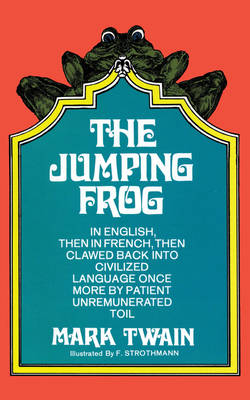
Omschrijving
"Smiley was surprised and disgusted, but he not himself doubted not of the turn being intended. The individual empocketed the silver, himself with it went, and of it himself in going is it that he no gives not a jerk of thumb over the shoulders -- like that -- at the poor Daniel, in saying with his air deliberate --
"'Eh bien! I no see not that that frog has nothing of better than another.'"
You would probably be hard-pressed to identify the author of the above passage as Mark Twain. And no wonder: this little bit of Twain's wit is part of a translation he made from a French translation of his celebrated "Frog" tale. The French translation was published in the Revue des Deux Mondes, the "Review of Some Two Worlds," as Twain styled it. The re-translation Twain made into English was supposed to be a clear demonstration of the French translator's incompetence. In any case, Twain, trusty tongue in cheek, obviously felt his re-translation to be the only suitable response to the French rendering of his inimitable tale. Certainly, the subtleties (such as they are) of the new English version will delight any language student.
But -- alas and alack -- imagine Twain's consternation (after having given his pitiable French imitator his just desserts) upon learning that the Calaveras County incident had been recorded in Greece two thousand years earlier. Can the reader believe it? Do not confuse this book with the original story alone. It contains the original, the French "traduction," Twain's re-translation, and a wealth of reflection by Twain. It is the only "complete" Jumping Frog.
"'Eh bien! I no see not that that frog has nothing of better than another.'"
You would probably be hard-pressed to identify the author of the above passage as Mark Twain. And no wonder: this little bit of Twain's wit is part of a translation he made from a French translation of his celebrated "Frog" tale. The French translation was published in the Revue des Deux Mondes, the "Review of Some Two Worlds," as Twain styled it. The re-translation Twain made into English was supposed to be a clear demonstration of the French translator's incompetence. In any case, Twain, trusty tongue in cheek, obviously felt his re-translation to be the only suitable response to the French rendering of his inimitable tale. Certainly, the subtleties (such as they are) of the new English version will delight any language student.
But -- alas and alack -- imagine Twain's consternation (after having given his pitiable French imitator his just desserts) upon learning that the Calaveras County incident had been recorded in Greece two thousand years earlier. Can the reader believe it? Do not confuse this book with the original story alone. It contains the original, the French "traduction," Twain's re-translation, and a wealth of reflection by Twain. It is the only "complete" Jumping Frog.
Specificaties
Betrokkenen
- Auteur(s):
- Uitgeverij:
Inhoud
- Aantal bladzijden:
- 96
- Taal:
- Engels
- Reeks:
Eigenschappen
- Productcode (EAN):
- 9780486226866
- Verschijningsdatum:
- 1/06/1971
- Uitvoering:
- Paperback
- Formaat:
- Trade paperback (VS)
- Afmetingen:
- 139 mm x 203 mm
- Gewicht:
- 127 g


Alleen bij Standaard Boekhandel
+ 13 punten op je klantenkaart van Standaard Boekhandel
CADEAU

AANGERADEN


Beoordelingen
We publiceren alleen reviews die voldoen aan de voorwaarden voor reviews. Bekijk onze voorwaarden voor reviews.