


- Afhalen na 1 uur in een winkel met voorraad
- Gratis thuislevering in België vanaf € 30
- Ruim aanbod met 7 miljoen producten
- Afhalen na 1 uur in een winkel met voorraad
- Gratis thuislevering in België vanaf € 30
- Ruim aanbod met 7 miljoen producten





Omschrijving
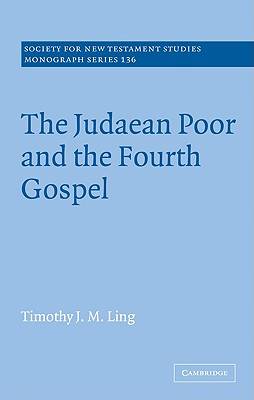
Judaean society in the first century did not conform to the stereotypical 'Mediterranean honour culture', in that it lacked a significant gentile population and was dominated by a powerful religious elite. Timothy Ling argues that this demands a new social-scientific approach to the Gospel and Letters of John that moves away from the accepted 'sectarian' interpretation. He attributes their distinctiveness instead to their roots in Jesus' Judaean ministry, as contrasted with the Galilean ministry that has attracted much recent study. In particular, Ling contends that the numerous references to 'the poor' in the New Testament can be better understood in the context of the 'alternative' ideologies found among pietistic religious groups practising asceticism, renunciation, and other forms of 'virtuoso religion' in first-century Judaea. In doing so, he mounts a convincing challenge to the current dominant reading of the Gospel of John as a product of early Christian sectarianism.
Specificaties
Betrokkenen
- Auteur(s):
- Uitgeverij:
Inhoud
- Aantal bladzijden:
- 264
- Taal:
- Engels
- Reeks:
- Reeksnummer:
- nr. 136
Eigenschappen
- Productcode (EAN):
- 9780521091428
- Verschijningsdatum:
- 4/12/2008
- Uitvoering:
- Paperback
- Formaat:
- Trade paperback (VS)
- Afmetingen:
- 140 mm x 216 mm
- Gewicht:
- 340 g


Alleen bij Standaard Boekhandel
+ 126 punten op je klantenkaart van Standaard Boekhandel
Cadeau

AANGERADEN


Beoordelingen
We publiceren alleen reviews die voldoen aan de voorwaarden voor reviews. Bekijk onze voorwaarden voor reviews.