


- Afhalen na 1 uur in een winkel met voorraad
- Gratis thuislevering in België vanaf € 30
- Ruim aanbod met 7 miljoen producten
- Afhalen na 1 uur in een winkel met voorraad
- Gratis thuislevering in België vanaf € 30
- Ruim aanbod met 7 miljoen producten





€ 41,95
+ 83 punten
Omschrijving
Reframes Italy's Alpine campaign as a hard-fought, complex operation shaped by terrain, logistics, and decision making
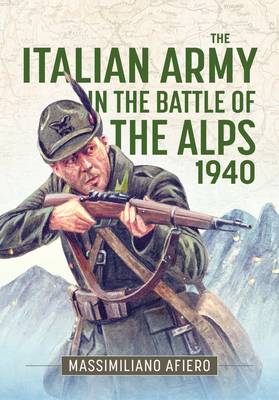
The Italian Army in the Battle of the Alps 1940 offers the first modern, full-scale operational study in English of Italy's often-misunderstood campaign against France in June 1940. Overshadowed by Germany's Blitzkrieg in the north and long dismissed as a symbolic or opportunistic sideshow, the Alpine campaign was in reality a hard-fought, complex, and frequently brutal military operation conducted in some of the most demanding terrain in Europe.
Drawing on extensive Italian and French archival sources, official unit histories, contemporary accounts, and post-war analyses, Massimiliano Afiero reconstructs the campaign from strategic decision-making in Rome through to the final armistice negotiations at Villa Incisa. The book places Italian operations firmly within their political and military context, examining Mussolini's decision to enter the war, the state of Italy's armed forces in 1940, and the constraints under which commanders were forced to operate.
At the operational and tactical level, the study provides a detailed, sector-by-sector account of the fighting along the entire Alpine front, from Mont Blanc to the Mediterranean coast. Particular attention is given to the actions of the Alpini, Bersaglieri, regular infantry divisions, Blackshirt units, Border Guard formations, and supporting artillery, as well as to French Alpine troops and fortress garrisons defending the 'Maginot Line of the Alps'. The book challenges persistent myths by showing that Italian troops frequently fought with determination and courage, despite severe shortages of equipment, inadequate logistics, poor weather, and the difficulties of assaulting fortified positions at altitude.
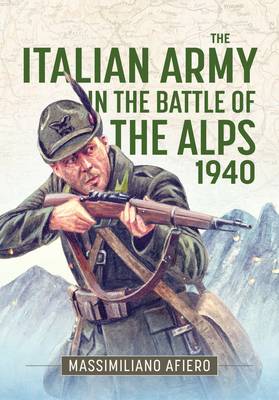
Richly illustrated with contemporary photographs, detailed maps, and specially commissioned colour artwork, the volume also examines weapons, uniforms, and specialist equipment used during the campaign, including Alpine artillery, light tanks, and air support from the Regia Aeronautica. Numerous acts of bravery and small-unit actions are documented, providing a human dimension to a campaign often reduced to caricature.
More than a narrative of a short but intense military operation, The Italian Army in the Battle of the Alps 1940 is a reassessment of Italy's first major land campaign of the Second World War. It offers essential reading for those interested in Alpine warfare, Italian military history, and the opening phase of the conflict in Western Europe.
The Italian Army in the Battle of the Alps 1940 offers the first modern, full-scale operational study in English of Italy's often-misunderstood campaign against France in June 1940. Overshadowed by Germany's Blitzkrieg in the north and long dismissed as a symbolic or opportunistic sideshow, the Alpine campaign was in reality a hard-fought, complex, and frequently brutal military operation conducted in some of the most demanding terrain in Europe.
Drawing on extensive Italian and French archival sources, official unit histories, contemporary accounts, and post-war analyses, Massimiliano Afiero reconstructs the campaign from strategic decision-making in Rome through to the final armistice negotiations at Villa Incisa. The book places Italian operations firmly within their political and military context, examining Mussolini's decision to enter the war, the state of Italy's armed forces in 1940, and the constraints under which commanders were forced to operate.
At the operational and tactical level, the study provides a detailed, sector-by-sector account of the fighting along the entire Alpine front, from Mont Blanc to the Mediterranean coast. Particular attention is given to the actions of the Alpini, Bersaglieri, regular infantry divisions, Blackshirt units, Border Guard formations, and supporting artillery, as well as to French Alpine troops and fortress garrisons defending the 'Maginot Line of the Alps'. The book challenges persistent myths by showing that Italian troops frequently fought with determination and courage, despite severe shortages of equipment, inadequate logistics, poor weather, and the difficulties of assaulting fortified positions at altitude.
Richly illustrated with contemporary photographs, detailed maps, and specially commissioned colour artwork, the volume also examines weapons, uniforms, and specialist equipment used during the campaign, including Alpine artillery, light tanks, and air support from the Regia Aeronautica. Numerous acts of bravery and small-unit actions are documented, providing a human dimension to a campaign often reduced to caricature.
More than a narrative of a short but intense military operation, The Italian Army in the Battle of the Alps 1940 is a reassessment of Italy's first major land campaign of the Second World War. It offers essential reading for those interested in Alpine warfare, Italian military history, and the opening phase of the conflict in Western Europe.
Specificaties
Betrokkenen
- Auteur(s):
- Uitgeverij:
Inhoud
- Aantal bladzijden:
- 184
- Taal:
- Engels
Eigenschappen
- Productcode (EAN):
- 9781804516669
- Verschijningsdatum:
- 28/05/2026
- Uitvoering:
- Hardcover
- Formaat:
- Genaaid
- Afmetingen:
- 171 mm x 248 mm
- Gewicht:
- 698 g


Alleen bij Standaard Boekhandel
+ 83 punten op je klantenkaart van Standaard Boekhandel
Cadeau

AANGERADEN


Beoordelingen
We publiceren alleen reviews die voldoen aan de voorwaarden voor reviews. Bekijk onze voorwaarden voor reviews.