


- Afhalen na 1 uur in een winkel met voorraad
- Gratis thuislevering in België vanaf € 30
- Ruim aanbod met 7 miljoen producten
- Afhalen na 1 uur in een winkel met voorraad
- Gratis thuislevering in België vanaf € 30
- Ruim aanbod met 7 miljoen producten





Omschrijving
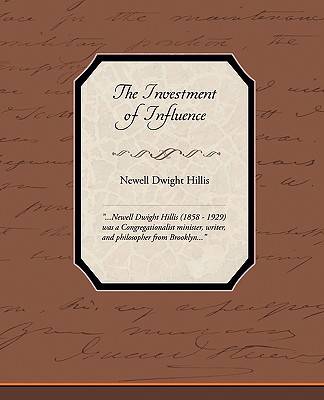
Newell Dwight Hillis (1858 - 1929) was a Congregationalist minister, writer, and philosopher from Brooklyn. As a minister in a major metropolis, Hillis railed against immorality, and he told reporters in 1900 that "a common whipping post might be very wholesome for New York today. The Investment of Influence: A Study of Social Sympathy and Service was first published in 1897. The forward reads, "The glory of our fathers was their emphasis of the principle of self-care and self-culture. Finding that he who first made the most of himself was best fitted to make something of others, the teachers of yesterday unceasingly plied men with motives of personal responsibility. Influenced by the former generation, our age has organized the principle of individualism into its home, its school, its market-place and forum. By reason of the increase in gold, books, travel and personal luxuries, some now feel that selfness is beginning to degenerate into selfishness. The time, therefore, seems to have fully come when the principle of self-care should receive its complement through the principle of care for others. These chapters assert the debt of wealth to poverty, the debt of wisdom to ignorance, the debt of strength to weakness. If "A Man's Value to Society" affirms the duty of self-culture and character, these studies emphasize the law of social sympathy and social service."
Specificaties
Betrokkenen
- Auteur(s):
- Uitgeverij:
Inhoud
- Aantal bladzijden:
- 146
- Taal:
- Engels
Eigenschappen
- Productcode (EAN):
- 9781438595276
- Verschijningsdatum:
- 22/04/2010
- Uitvoering:
- Paperback
- Formaat:
- Trade paperback (VS)
- Afmetingen:
- 190 mm x 235 mm
- Gewicht:
- 263 g


Alleen bij Standaard Boekhandel
+ 48 punten op je klantenkaart van Standaard Boekhandel

Beoordelingen
We publiceren alleen reviews die voldoen aan de voorwaarden voor reviews. Bekijk onze voorwaarden voor reviews.