


- Afhalen na 1 uur in een winkel met voorraad
- Gratis thuislevering in België vanaf € 30
- Ruim aanbod met 7 miljoen producten
- Afhalen na 1 uur in een winkel met voorraad
- Gratis thuislevering in België vanaf € 30
- Ruim aanbod met 7 miljoen producten





€ 17,34
+ 17 punten
Omschrijving
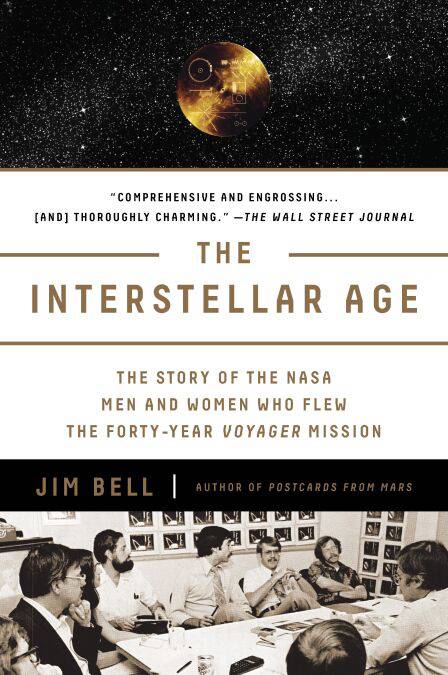
The story of the men and women who drove NASA’s Voyager spacecraft mission—the farthest-flung emissaries of planet Earth—told by a scientist who was there from the beginning.
Voyager 1 left our solar system in 2012; its sister craft, Voyager 2, did so in 2018. The fantastic journey began in 1977, before the first episode of Cosmos aired. The mission was planned as a grand tour beyond the moon; beyond Mars, Jupiter, Saturn, Uranus and Neptune; and maybe even into interstellar space. The fact that it actually happened makes this humanity’s greatest space mission.
In The Interstellar Age, award-winning planetary scientist Jim Bell reveals what drove and continues to drive the members of this extraordinary team, including Ed Stone, Voyager’s chief scientist and the one-time head of NASA’s Jet Propulsion Lab; Charley Kohlhase, an orbital dynamics engineer who helped to design many of the critical slingshot maneuvers around planets that enabled the Voyagers to travel so far; and the geologist whose Earth-bound experience would prove of little help in interpreting the strange new landscapes revealed in the Voyagers’ astoundingly clear images of moons and planets.
Speeding through space at a mind-bending eleven miles a second, Voyager 1 and Voyager 2 are now beyond our solar system’s planets, the first man-made objects to go interstellar. By the time Voyager passes its first star in about 40,000 years, the gold record on the spacecraft, containing various music and images including Chuck Berry’s “Johnny B. Goode,” will still be playable.
*An ALA Notable Book of 2015*
Voyager 1 left our solar system in 2012; its sister craft, Voyager 2, did so in 2018. The fantastic journey began in 1977, before the first episode of Cosmos aired. The mission was planned as a grand tour beyond the moon; beyond Mars, Jupiter, Saturn, Uranus and Neptune; and maybe even into interstellar space. The fact that it actually happened makes this humanity’s greatest space mission.
In The Interstellar Age, award-winning planetary scientist Jim Bell reveals what drove and continues to drive the members of this extraordinary team, including Ed Stone, Voyager’s chief scientist and the one-time head of NASA’s Jet Propulsion Lab; Charley Kohlhase, an orbital dynamics engineer who helped to design many of the critical slingshot maneuvers around planets that enabled the Voyagers to travel so far; and the geologist whose Earth-bound experience would prove of little help in interpreting the strange new landscapes revealed in the Voyagers’ astoundingly clear images of moons and planets.
Speeding through space at a mind-bending eleven miles a second, Voyager 1 and Voyager 2 are now beyond our solar system’s planets, the first man-made objects to go interstellar. By the time Voyager passes its first star in about 40,000 years, the gold record on the spacecraft, containing various music and images including Chuck Berry’s “Johnny B. Goode,” will still be playable.
*An ALA Notable Book of 2015*


Alleen bij Standaard Boekhandel
+ 17 punten op je klantenkaart van Standaard Boekhandel
Cadeau

AANGERADEN


Beoordelingen
We publiceren alleen reviews die voldoen aan de voorwaarden voor reviews. Bekijk onze voorwaarden voor reviews.