


- Afhalen na 1 uur in een winkel met voorraad
- Gratis thuislevering in België vanaf € 30
- Ruim aanbod met 7 miljoen producten
- Afhalen na 1 uur in een winkel met voorraad
- Gratis thuislevering in België vanaf € 30
- Ruim aanbod met 7 miljoen producten





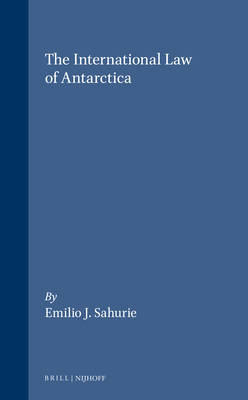
The International Law of Antarctica
Emilio J Sahurie
€ 290,45
+ 580 punten
Omschrijving
Antarctica is the last, most inhospitable frontier on earth, yet it presents a great number of unresolved conflicts between nations, individuals, environmentalists, scientists and business groups. The International Law of Antarctica addresses the crucial question of how international law can respond to claims that will certainly shape tomorrow's Antarctica. The author adopts a policy-oriented approach and focuses on the primary issue of determining the effective norms by which the process of value shaping and sharing develops in Antarctica, and to what extent such norms satisfy the prevailing aspirations of the world community. Where discrepancies are significant policies are proposed that may better meet such aspirations, as well as methods for their implementation.
Part I of this study describes the social, power, and legal processes relating to Antarctica; reviews the geographic, technological, economic, and historical context in which these processes evolve, and how their special features affect such processes; and finally postulates the basic community policies with reference to which the process of claims and decisions in Antarctica are analyzed. Part II focuses on national claims to Antarctica by reviewing claims relating to the modes to establish exclusive appropriation of the area. Part III is a detailed examination of specific claims to Antarctica resources: claims to mineral and living resources, and claims relating to space-extension resources, namely, Antarctica sea and air space. It is concluded by an appraisal of the congruence of the existing order of Antarctica with the postulated basic policies, critically reviewing proposals for a new order, and advancing long-term and more immediate alternatives.
Part I of this study describes the social, power, and legal processes relating to Antarctica; reviews the geographic, technological, economic, and historical context in which these processes evolve, and how their special features affect such processes; and finally postulates the basic community policies with reference to which the process of claims and decisions in Antarctica are analyzed. Part II focuses on national claims to Antarctica by reviewing claims relating to the modes to establish exclusive appropriation of the area. Part III is a detailed examination of specific claims to Antarctica resources: claims to mineral and living resources, and claims relating to space-extension resources, namely, Antarctica sea and air space. It is concluded by an appraisal of the congruence of the existing order of Antarctica with the postulated basic policies, critically reviewing proposals for a new order, and advancing long-term and more immediate alternatives.
Specificaties
Betrokkenen
- Auteur(s):
- Uitgeverij:
Inhoud
- Aantal bladzijden:
- 642
- Taal:
- Engels
- Reeks:
- Reeksnummer:
- nr. 6
Eigenschappen
- Productcode (EAN):
- 9780792310372
- Verschijningsdatum:
- 1/07/1992
- Uitvoering:
- Hardcover
- Formaat:
- Genaaid
- Afmetingen:
- 169 mm x 245 mm
- Gewicht:
- 988 g


Alleen bij Standaard Boekhandel
+ 580 punten op je klantenkaart van Standaard Boekhandel
Cadeau

AANGERADEN


Beoordelingen
We publiceren alleen reviews die voldoen aan de voorwaarden voor reviews. Bekijk onze voorwaarden voor reviews.