


- Afhalen na 1 uur in een winkel met voorraad
- Gratis thuislevering in België vanaf € 30
- Ruim aanbod met 7 miljoen producten
- Afhalen na 1 uur in een winkel met voorraad
- Gratis thuislevering in België vanaf € 30
- Ruim aanbod met 7 miljoen producten





€ 306,45
+ 612 punten
Omschrijving
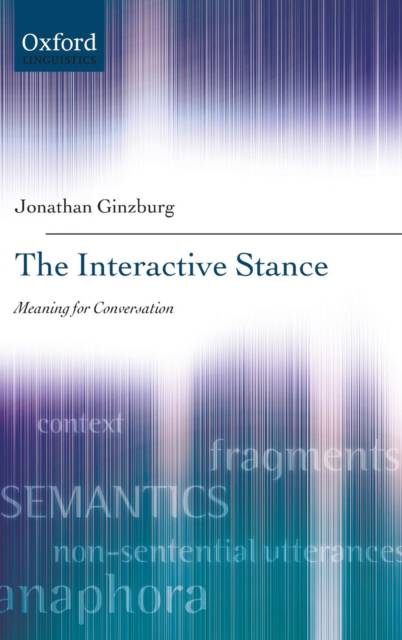
This book presents one of the first attempts at developing a precise, grammatically rooted, theory of conversation motivated by data from real conversations. The theory has descriptive reach from the micro-conversational -- e.g. self-repair at the word level -- to macro-level phenomena such as multi-party conversation and the characterization of distinct conversational genres. It draws on extensive corpus studies of the British National Corpus, on evidence from language acquisition, and on computer simulations of language evolution. The theory provides accounts of the opening, middle game, and closing stages of conversation. It also offers a new perspective on traditional semantic concerns such as quantification and anaphora. The Interactive Stance challenges orthodox views of grammar by arguing that, unless we wish to exclude from analysis a large body of frequently occurring words and constructions, the right way to construe grammar is as a system that characterizes types of talk in interaction.
Specificaties
Betrokkenen
- Auteur(s):
- Uitgeverij:
Inhoud
- Aantal bladzijden:
- 432
- Taal:
- Engels
Eigenschappen
- Productcode (EAN):
- 9780199697922
- Verschijningsdatum:
- 21/03/2012
- Uitvoering:
- Hardcover
- Formaat:
- Genaaid
- Afmetingen:
- 157 mm x 234 mm
- Gewicht:
- 793 g


Alleen bij Standaard Boekhandel
+ 612 punten op je klantenkaart van Standaard Boekhandel
Cadeau

AANGERADEN


Beoordelingen
We publiceren alleen reviews die voldoen aan de voorwaarden voor reviews. Bekijk onze voorwaarden voor reviews.