


- Afhalen na 1 uur in een winkel met voorraad
- Gratis thuislevering in België vanaf € 30
- Ruim aanbod met 7 miljoen producten
- Afhalen na 1 uur in een winkel met voorraad
- Gratis thuislevering in België vanaf € 30
- Ruim aanbod met 7 miljoen producten





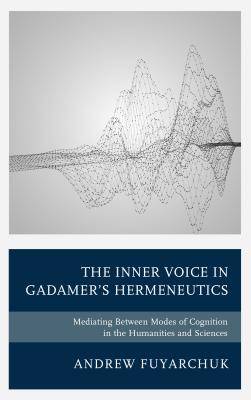
The Inner Voice in Gadamer's Hermeneutics
Mediating Between Modes of Cognition in the Humanities and Sciences
Andrew Fuyarchuk
Hardcover | Engels
€ 220,45
+ 440 punten
Omschrijving
The inner word in Gadamer's hermeneutics refers to the meaning that exceeds anything explicitly said. This explanation has been subsumed within metaphysical and theological parameters of interpretation with little regard for the implication of Gadamer's turn to the living language for understanding the inner word. Through examining his phenomenology of the inner word, The Inner Voice in Gadamer's Hermeneutics reveals its musical (rhythmic and tonal) dimensions and how they function to harmonize disparate orientations in the middle voice, above all for Gadamer, those that underlie modes of cognition in both the humanities and the sciences--a visual and auditory ethos. However, understood as constituting the music of language discernible in the middle voice, the inner word is also suppressed or forgotten by the technological extension of sight--that is, print--and thus requires a turn of the inner ear or auditory disposition. Andrew Fuyarchuk assesses theories of language in evolutionary and cognitive science in light of Gadamer's insights into the nature of thought, and he employs them to account for a dimension of language that is inscribed in the lingual minds of our species. When recalled by the inner ear, this dimension enables us to think such opposites together as we find in the humanities and sciences together. This thinking together is expressed in a double account of an object of inquiry, such as the one Fuyarchuk puts forward about the inner word in Gadamer's philosophical hermeneutics.
Specificaties
Betrokkenen
- Auteur(s):
- Uitgeverij:
Inhoud
- Aantal bladzijden:
- 282
- Taal:
- Engels
Eigenschappen
- Productcode (EAN):
- 9781498547055
- Verschijningsdatum:
- 21/07/2017
- Uitvoering:
- Hardcover
- Formaat:
- Genaaid
- Afmetingen:
- 152 mm x 231 mm
- Gewicht:
- 612 g


Alleen bij Standaard Boekhandel
+ 440 punten op je klantenkaart van Standaard Boekhandel
Cadeau

AANGERADEN


Beoordelingen
We publiceren alleen reviews die voldoen aan de voorwaarden voor reviews. Bekijk onze voorwaarden voor reviews.