



Je cadeautjes zeker op tijd in huis hebben voor de feestdagen? Kom langs in onze winkels en vind het perfecte geschenk!
- Afhalen na 1 uur in een winkel met voorraad
- Gratis thuislevering in België vanaf € 30
- Ruim aanbod met 7 miljoen producten
Je cadeautjes zeker op tijd in huis hebben voor de feestdagen? Kom langs in onze winkels en vind het perfecte geschenk!
- Afhalen na 1 uur in een winkel met voorraad
- Gratis thuislevering in België vanaf € 30
- Ruim aanbod met 7 miljoen producten





Omschrijving
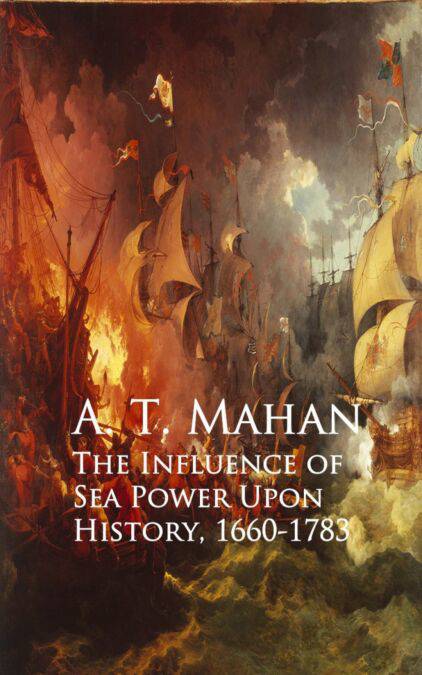
The definite object proposed in this work is an examination of the general history of Europe and America with particular reference to the effect of sea power upon the course of that history. Historians generally have been unfamiliar with the conditions of the sea, having as to it neither special interest nor special knowledge; and the profound determining influence of maritime strength upon great issues has consequently been overlooked. This is even more true of particular occasions than of the general tendency of sea power. It is easy to say in a general way, that the use and control of the sea is and has been a great factor in the history of the world; it is more troublesome to seek out and show its exact bearing at a particular juncture. Yet, unless this be done, the acknowledgment of general importance remains vague and unsubstantial; not resting, as it should, upon a collection of special instances in which the precise effect has been made clear, by an analysis of the conditions at the given moments.
A curious exemplification of this tendency to slight the bearing of maritime power upon events may be [iv]drawn from two writers of that English nation which more than any other has owed its greatness to the sea. "Twice," says Arnold in his History of Rome, "Has there been witnessed the struggle of the highest individual genius against the resources and institutions of a great nation, and in both cases the nation was victorious. For seventeen years Hannibal strove against Rome, for sixteen years Napoleon strove against England; the efforts of the first ended in Zama, those of the second in Waterloo." Sir Edward Creasy, quoting this, adds: "One point, however, of the similitude between the two wars has scarcely been adequately dwelt on; that is, the remarkable parallel between the Roman general who finally defeated the great Carthaginian, and the English general who gave the last deadly overthrow to the French emperor.
A curious exemplification of this tendency to slight the bearing of maritime power upon events may be [iv]drawn from two writers of that English nation which more than any other has owed its greatness to the sea. "Twice," says Arnold in his History of Rome, "Has there been witnessed the struggle of the highest individual genius against the resources and institutions of a great nation, and in both cases the nation was victorious. For seventeen years Hannibal strove against Rome, for sixteen years Napoleon strove against England; the efforts of the first ended in Zama, those of the second in Waterloo." Sir Edward Creasy, quoting this, adds: "One point, however, of the similitude between the two wars has scarcely been adequately dwelt on; that is, the remarkable parallel between the Roman general who finally defeated the great Carthaginian, and the English general who gave the last deadly overthrow to the French emperor.
Specificaties
Betrokkenen
- Auteur(s):
- Uitgeverij:
Inhoud
- Aantal bladzijden:
- 500
- Taal:
- Engels
Eigenschappen
- Productcode (EAN):
- 9783736410442
- Verschijningsdatum:
- 25/08/2016
- Uitvoering:
- E-book
- Beveiligd met:
- Digital watermarking
- Formaat:
- ePub


Alleen bij Standaard Boekhandel
CADEAU


Beoordelingen
We publiceren alleen reviews die voldoen aan de voorwaarden voor reviews. Bekijk onze voorwaarden voor reviews.