



- Afhalen na 1 uur in een winkel met voorraad
- In januari gratis thuislevering in België
- Ruim aanbod met 7 miljoen producten
- Afhalen na 1 uur in een winkel met voorraad
- In januari gratis thuislevering in België
- Ruim aanbod met 7 miljoen producten





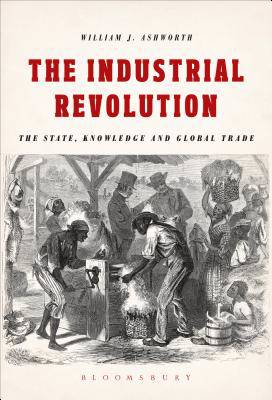
The Industrial Revolution
The State, Knowledge and Global Trade
William J Ashworth
Paperback | Engels
€ 64,45
+ 128 punten
Uitvoering
Omschrijving
The British Industrial Revolution has long been seen as the spark for modern, global industrialization and sustained economic growth. Indeed the origins of economic history, as a discipline, lie in 19th-century European and North American attempts to understand the foundation of this process.
In this book, William J. Ashworth questions some of the orthodoxies concerning the history of the industrial revolution and offers a deep and detailed reassessment of the subject that focuses on the State and its role in the development of key British manufactures. In particular, he explores the role of State regulation and protectionism in nurturing Britain's negligible early manufacturing base. Taking a long view, from the mid 17th century through to the 19th century, the analysis weaves together a vast range of factors to provide one of the fullest analyses of the industrial revolution, and one that places it firmly within a global context, showing that the Industrial Revolution was merely a short moment within a much larger and longer global trajectory. This book is an important intervention in the debates surrounding modern industrial history will be essential reading for anyone interested in global and comparative economic history and the history of globalization.Specificaties
Betrokkenen
- Auteur(s):
- Uitgeverij:
Inhoud
- Aantal bladzijden:
- 352
- Taal:
- Engels
Eigenschappen
- Productcode (EAN):
- 9781474286466
- Verschijningsdatum:
- 26/01/2017
- Uitvoering:
- Paperback
- Formaat:
- Trade paperback (VS)
- Afmetingen:
- 155 mm x 231 mm
- Gewicht:
- 521 g


Alleen bij Standaard Boekhandel
+ 128 punten op je klantenkaart van Standaard Boekhandel
Cadeau

AANGERADEN


Beoordelingen
We publiceren alleen reviews die voldoen aan de voorwaarden voor reviews. Bekijk onze voorwaarden voor reviews.