


- Afhalen na 1 uur in een winkel met voorraad
- Gratis thuislevering in België vanaf € 30
- Ruim aanbod met 7 miljoen producten
- Afhalen na 1 uur in een winkel met voorraad
- Gratis thuislevering in België vanaf € 30
- Ruim aanbod met 7 miljoen producten





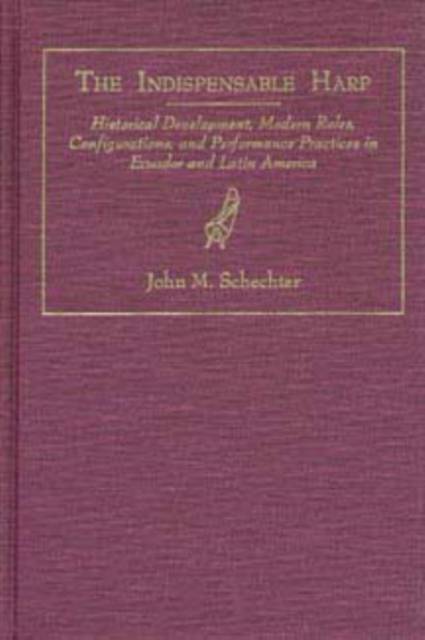
The Indispensible Harp
Historical Development, Modern Roles, Configurations, and Performance Practices in Ecuador and Latin America
Schechter
€ 48,95
+ 97 punten
Omschrijving
A musical instrument that has played a vital role in Latin American music cultures--the harp--is the subject of this new work, the first study of its kind to be published in English. John Schechter presents a history of the harp in Spain, traces its introduction into colonial Latin America, and describes its modern roles in the diverse cultural centers of Mexico, Paraguay-Argentina-chile, Venezuela, and Peru. He then turns his focus to his own field research in the Quichua culture of northern highland Ecuador, an area that has receive considerably less scholarly attention than many of its Latin American neighbors. The reader will meet a community of harp maistrus on the slopes of Mt. Cotacachi and become familiar with their culture, their particular instrument and its tuning, and their performance practices. Numerous photographs, musical transcriptions, and diagrams illustrate and enliven the text. The Indispensable Harp is unique for its integration of aspects of music and cultural history, organology, and performance practice, treating in considerable depth both broadly established music-ethnographical practices. It speaks to the conclusion that the vital role of the harp in Latin American music history has now been properly acknowledged and documented.
Specificaties
Betrokkenen
- Auteur(s):
- Uitgeverij:
Inhoud
- Aantal bladzijden:
- 296
- Taal:
- Engels
- Reeks:
Eigenschappen
- Productcode (EAN):
- 9780873384391
- Verschijningsdatum:
- 1/08/1992
- Uitvoering:
- Hardcover
- Formaat:
- Genaaid
- Afmetingen:
- 155 mm x 231 mm
- Gewicht:
- 639 g


Alleen bij Standaard Boekhandel
+ 97 punten op je klantenkaart van Standaard Boekhandel
Cadeau

AANGERADEN


Beoordelingen
We publiceren alleen reviews die voldoen aan de voorwaarden voor reviews. Bekijk onze voorwaarden voor reviews.