


- Afhalen na 1 uur in een winkel met voorraad
- Gratis thuislevering in België vanaf € 30
- Ruim aanbod met 7 miljoen producten
- Afhalen na 1 uur in een winkel met voorraad
- Gratis thuislevering in België vanaf € 30
- Ruim aanbod met 7 miljoen producten





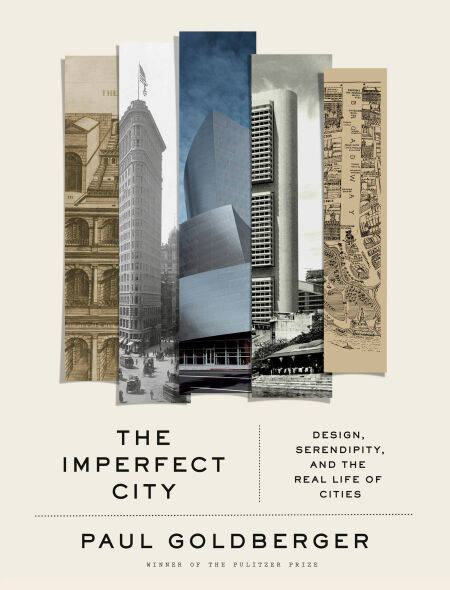
The Imperfect City E-BOOK
Design, Serendipity, and the Real Life of Cities
Paul Goldberger
E-book | Engels
€ 17,34
+ 17 punten
Uitvoering
Omschrijving
A Pulitzer Prize–winning architectural critic explores how modern cities thrive when urban planning leaves room for happy accidents and innovations.
“A city is not a symphony, composed as a single work,” Paul Goldberger writes. “It is more like jazz, with its mix of order and improvisation.” The Imperfect City is a record of Goldberger’s looking, lingering, and thinking about cities—how they develop their character, how they affect us, and how they change. On this exhilarating journey around the world, Goldberger points out each city’s notable qualities, from the eco-friendly features of Singapore’s skyscrapers to the collision and coexistence of old and new in Rome, to the boldly imagined lakefront in Chicago. He wanders the picturesque canals of Amsterdam, sets off down the jagged slash of Broadway across Manhattan’s grid, and follows the poetic sweep of Los Angeles’s freeway ramps.
Goldberger brings the world’s cities to life on these pages, mixing stories of bold planners and architects bidding for immortality with random, often haphazard elements that pop up in cities as if by accident. Both are necessary, he argues, since no city can be designed down to the last square foot, but neither can the growth of a city be left entirely to chance. All cities are a mix of planning and happenstance, and the best cities are the ones that blend great design with casual, ordinary places: “The city is a collage, not a portrait,” Goldberger writes.
Drawn from a lifetime of appreciation, dating back to his own tender-aged first arrivals in Manhattan, Paris, and beyond, this warm and brilliant book shows that the joy of urban experience comes not from seeking the perfection of order, but from embracing the energy, beauty, and unpredictability of cities at their best. The Imperfect City helps us to understand how cities, and people, truly evolve—by luck, accident, and design.
“A city is not a symphony, composed as a single work,” Paul Goldberger writes. “It is more like jazz, with its mix of order and improvisation.” The Imperfect City is a record of Goldberger’s looking, lingering, and thinking about cities—how they develop their character, how they affect us, and how they change. On this exhilarating journey around the world, Goldberger points out each city’s notable qualities, from the eco-friendly features of Singapore’s skyscrapers to the collision and coexistence of old and new in Rome, to the boldly imagined lakefront in Chicago. He wanders the picturesque canals of Amsterdam, sets off down the jagged slash of Broadway across Manhattan’s grid, and follows the poetic sweep of Los Angeles’s freeway ramps.
Goldberger brings the world’s cities to life on these pages, mixing stories of bold planners and architects bidding for immortality with random, often haphazard elements that pop up in cities as if by accident. Both are necessary, he argues, since no city can be designed down to the last square foot, but neither can the growth of a city be left entirely to chance. All cities are a mix of planning and happenstance, and the best cities are the ones that blend great design with casual, ordinary places: “The city is a collage, not a portrait,” Goldberger writes.
Drawn from a lifetime of appreciation, dating back to his own tender-aged first arrivals in Manhattan, Paris, and beyond, this warm and brilliant book shows that the joy of urban experience comes not from seeking the perfection of order, but from embracing the energy, beauty, and unpredictability of cities at their best. The Imperfect City helps us to understand how cities, and people, truly evolve—by luck, accident, and design.
Specificaties
Betrokkenen
- Auteur(s):
- Uitgeverij:
Inhoud
- Aantal bladzijden:
- 288
- Taal:
- Engels
Eigenschappen
- Productcode (EAN):
- 9780593536520
- Verschijningsdatum:
- 16/11/2026
- Uitvoering:
- E-book
- Beveiligd met:
- Adobe DRM
- Formaat:
- ePub


Alleen bij Standaard Boekhandel
+ 17 punten op je klantenkaart van Standaard Boekhandel
Cadeau

AANGERADEN


Beoordelingen
We publiceren alleen reviews die voldoen aan de voorwaarden voor reviews. Bekijk onze voorwaarden voor reviews.