


- Afhalen na 1 uur in een winkel met voorraad
- Gratis thuislevering in België vanaf € 30
- Ruim aanbod met 7 miljoen producten
- Afhalen na 1 uur in een winkel met voorraad
- Gratis thuislevering in België vanaf € 30
- Ruim aanbod met 7 miljoen producten





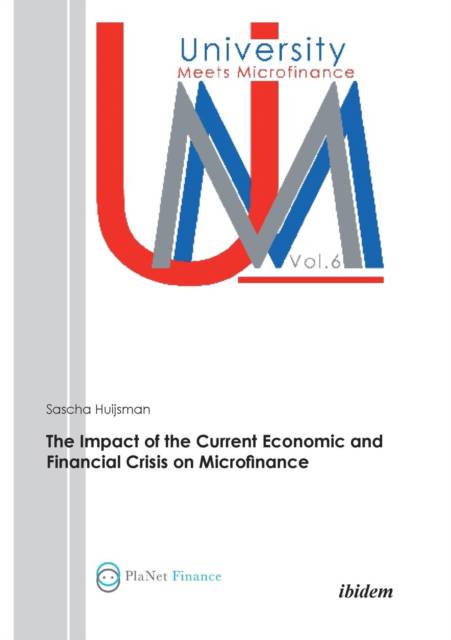
The Impact of the Current Economic and Financial Crisis on Microfinance
Sascha Huijsman
€ 21,45
+ 42 punten
Omschrijving
The recent global macroeconomic crisis creates an exceptionally interesting possibility to investigate the linkages of the microfinance sector to mainstream markets and its connections with domestic markets as well as international markets a subject whose significance has increased in recent years due to the growing importance of microfinance as part of local financial systems of developing countries and with more and more involvement of commercial investors. Sascha Huijsman's book is one of the very few studies on this relationship. She provides a rigorous analysis of the impact of the financial crisis on microfinance institutions (MFIs) by using data from a worldwide survey with MFI managers and utilising monthly financial data of almost 60 MFIs. Although microfinance-specific characteristics, such as socially oriented, highly committed investors and the nature of microfinance enterprises, which typically operate in the informal sector, so far nourished the assumption that MFIs were isolated from the impact of fluctuations on mainstream markets, Huijsman's study convincingly shows that through different linkages microfinance is to a certain extent connected to formal market movements
Interestingly, however, it turns out there are considerable differences between the impact on MFIs in different regions; especially MFIs in Eastern Europe have been affected. Moreover, MFIs offering savings services to their clients turned out to be more resilient to the crisis.
Huijsman's study provides plenty of unexpected results and certainly is a must-read for practitioners and researchers in the field of microfinance.
Interestingly, however, it turns out there are considerable differences between the impact on MFIs in different regions; especially MFIs in Eastern Europe have been affected. Moreover, MFIs offering savings services to their clients turned out to be more resilient to the crisis.
Huijsman's study provides plenty of unexpected results and certainly is a must-read for practitioners and researchers in the field of microfinance.
Specificaties
Betrokkenen
- Auteur(s):
- Uitgeverij:
Inhoud
- Aantal bladzijden:
- 104
- Taal:
- Engels
- Reeks:
- Reeksnummer:
- nr. 6
Eigenschappen
- Productcode (EAN):
- 9783838202358
- Verschijningsdatum:
- 18/10/2011
- Uitvoering:
- Paperback
- Afmetingen:
- 153 mm x 212 mm
- Gewicht:
- 135 g


Alleen bij Standaard Boekhandel
+ 42 punten op je klantenkaart van Standaard Boekhandel
Cadeau

AANGERADEN


Beoordelingen
We publiceren alleen reviews die voldoen aan de voorwaarden voor reviews. Bekijk onze voorwaarden voor reviews.