


- Afhalen na 1 uur in een winkel met voorraad
- Gratis thuislevering in België vanaf € 30
- Ruim aanbod met 7 miljoen producten
- Afhalen na 1 uur in een winkel met voorraad
- Gratis thuislevering in België vanaf € 30
- Ruim aanbod met 7 miljoen producten





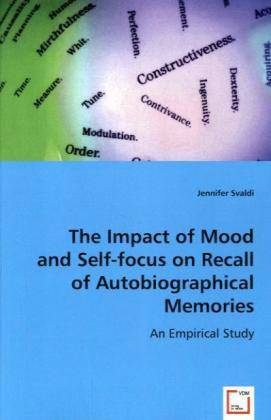
The Impact of Mood and Self-focus on Recall of Autobiographical Memories
An Empirical Study
Jennifer Svaldi
Paperback | Engels
€ 48,45
+ 96 punten
Omschrijving
The study presented in this book focuses on the influencethat mood and self focus have on recall of autobiographical memory(AM) specificity. While former works outlined the traitcharacteristics of AM recall, newer studies demonstrate that recallof AM is modifiable. However, temporal stability and deliberatemanipulation are not necessarily antagonisms. While temporalstability provides valuable diagnostic knowledge, as a basicprinciple modification promises effective therapeuticinterventions. In the introduction the author gives a summary overthe previous results on AM specificity research and discusses themin the context of theories that explain retrieval mechanisms(descriptions theory, constructivism, executive functions). Thenshe gives empirical evidence of the detrimental and beneficaleffects of self-focus with regard to the linkage between mood andmemory. In an experimental approach she then investigates howrumination and self-reflection as well as positive and negativemood influence recall of specific autobiographical memories anddiscusses the results in the context of the mood congruency and themnemonic interlock paradigms.
Specificaties
Betrokkenen
- Auteur(s):
- Uitgeverij:
Inhoud
- Aantal bladzijden:
- 68
- Taal:
- Engels
Eigenschappen
- Productcode (EAN):
- 9783639020045
- Uitvoering:
- Paperback
- Afmetingen:
- 220
- Gewicht:
- 110 g


Alleen bij Standaard Boekhandel
+ 96 punten op je klantenkaart van Standaard Boekhandel
CADEAU

AANGERADEN


Beoordelingen
We publiceren alleen reviews die voldoen aan de voorwaarden voor reviews. Bekijk onze voorwaarden voor reviews.