


- Afhalen na 1 uur in een winkel met voorraad
- Gratis thuislevering in België vanaf € 30
- Ruim aanbod met 7 miljoen producten
- Afhalen na 1 uur in een winkel met voorraad
- Gratis thuislevering in België vanaf € 30
- Ruim aanbod met 7 miljoen producten





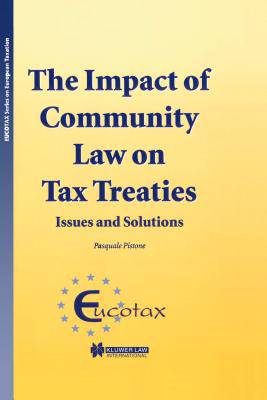
The Impact of Community Law on Tax Treaties - Issues and Solutions
Issues and Solutions
Pasquale Pistone
€ 159,00
+ 318 punten
Omschrijving
In this book, Dr. Pistone discusses such matters as: how Member States must comply with EC law as they apply their tax treaties; how EC law regulates cross-border tax issues within the Community; and how EC law affects tax treaties between EU Member States and third countries. The analysis is undertaken in the context of the work of European tax scholars writing in most EU languages, thus bringing numerous important theories and proposals into the spotlight for the first time. The author provides expert commentary on 27 leading tax cases from the European Court of Justice, from Avoir fiscal (1986) to Hoechst and Metallgesellschaft (2001). He clearly delineates the legal framework built by these cases, and the repercussions on national, Community, and international tax law and practice. However, the major contribution of this book, above and beyond its full-scale analysis of a crucial European legal regime as currently constituted, is the author's proposed EC Model Tax Convention, presented in Chapter Five. This Model combines existing provisions of international tax law, as embodied in the OECD Model, with the principles of Community tax law as enunciated by the European Court of Justice, and at the same time converts the body of recent scholarship into viable action programs.
Specificaties
Betrokkenen
- Auteur(s):
- Uitgeverij:
Inhoud
- Aantal bladzijden:
- 405
- Taal:
- Engels
- Reeks:
Eigenschappen
- Productcode (EAN):
- 9789041198600
- Verschijningsdatum:
- 11/03/2002
- Uitvoering:
- Hardcover
- Formaat:
- Genaaid
- Afmetingen:
- 162 mm x 249 mm
- Gewicht:
- 802 g


Alleen bij Standaard Boekhandel
+ 318 punten op je klantenkaart van Standaard Boekhandel
Cadeau

AANGERADEN


Beoordelingen
We publiceren alleen reviews die voldoen aan de voorwaarden voor reviews. Bekijk onze voorwaarden voor reviews.