


- Afhalen na 1 uur in een winkel met voorraad
- Gratis thuislevering in België vanaf € 30
- Ruim aanbod met 7 miljoen producten
- Afhalen na 1 uur in een winkel met voorraad
- Gratis thuislevering in België vanaf € 30
- Ruim aanbod met 7 miljoen producten




€ 320,95
+ 641 punten
Uitvoering
Omschrijving
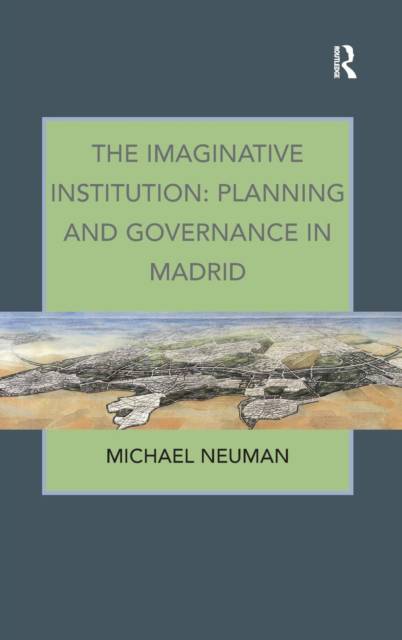
Every 20 years since 1920, Madrid has undergone an urban planning cycle in which a city plan was prepared, adopted by law, and implemented by a new institution. This preparation-adoption-institutionalization sequence, along with the institution's structures and procedures, have persisted - with some exceptions - despite frequent upheavals in society. The planning institution itself played a lead role in maintaining continuity, traumatic history notwithstanding. Why and how was this the case? Madrid's planners, who had mostly trained as architects, invented new images for the city and metro region: images of urban space that were social constructs, the products of planning processes. These images were tools that coordinated planning and urban policy. In a complex, fragmented institutional milieu in which scores of organized interests competed in overlapping policy arenas, images were a cohesive force around which plans, policies, and investments were shaped. Planners in Madrid also used their images to build new institutions. Images began as city or metropolitan designs or as a metaphor capturing a new vision. New political regimes injected their principles and beliefs into the governing institution via images and metaphors. These images went a long way in constituting the new institution, and in helping realize each regime's goals. This empirically-based life cycle theory of institutional evolution suggests that the constitutional image sustaining the institution undergoes a change or is replaced by a new image, leading to a new or reformed institution. A life cycle typology of institutional transformation is formulated with four variables: type of change, stimulus for change, type of constitutional image, and outcome of the transformation. By linking the life cycle hypothesis with cognitive theories of image formation, and then situating their synthesis within a frame of cognition as a means of structuring the institution, this book arrives at a new theory
Specificaties
Betrokkenen
- Auteur(s):
- Uitgeverij:
Inhoud
- Aantal bladzijden:
- 254
- Taal:
- Engels
Eigenschappen
- Productcode (EAN):
- 9781409405412
- Verschijningsdatum:
- 19/10/2010
- Uitvoering:
- Hardcover
- Formaat:
- Genaaid
- Afmetingen:
- 156 mm x 234 mm
- Gewicht:
- 535 g



Alleen bij Standaard Boekhandel
+ 641 punten op je klantenkaart van Standaard Boekhandel
CADEAU


Beoordelingen
We publiceren alleen reviews die voldoen aan de voorwaarden voor reviews. Bekijk onze voorwaarden voor reviews.