


- Afhalen na 1 uur in een winkel met voorraad
- Gratis thuislevering in België vanaf € 30
- Ruim aanbod met 7 miljoen producten
- Afhalen na 1 uur in een winkel met voorraad
- Gratis thuislevering in België vanaf € 30
- Ruim aanbod met 7 miljoen producten





€ 80,95
+ 161 punten
Uitvoering
Omschrijving
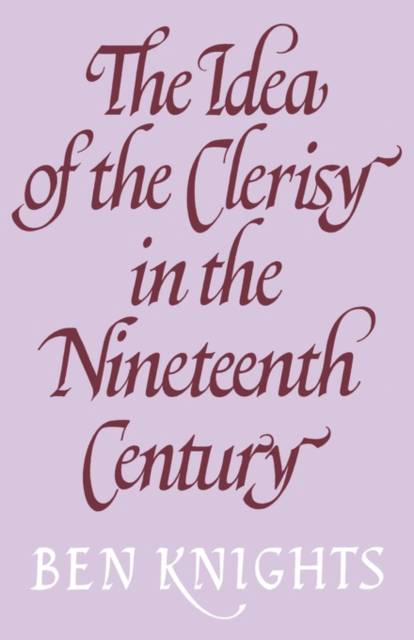
This book is about the development in nineteenth-century England of the idea of a secular intellectual elite - the 'clerisy'. These intellectuals wanted to free themselves from the pressures of material conditioning and be in touch with transcendent values. This elite would be capable of seeing and valuing the best in the national cultural heritage and raising the standard of intellectual life. Dr Knights considers five major writers who shared this concern: Coleridge, Carlyle, Matthew Arnold, J. S. Mill and J. H. Newman. He finds important similarities, arising out of shared problems and assumptions. The status of literary culture was still such that to many of its practitioners a 'clerisy' offered the only hope of reversing a trend towards cultural and social disintegration. Dr Knights goes on to examine the influence of the idea upon the reorganisation of university curricula in the latter part of the century.
Specificaties
Betrokkenen
- Auteur(s):
- Uitgeverij:
Inhoud
- Aantal bladzijden:
- 288
- Taal:
- Engels
Eigenschappen
- Productcode (EAN):
- 9780521142496
- Verschijningsdatum:
- 10/06/2010
- Uitvoering:
- Paperback
- Formaat:
- Trade paperback (VS)
- Afmetingen:
- 140 mm x 216 mm
- Gewicht:
- 367 g



Alleen bij Standaard Boekhandel
+ 161 punten op je klantenkaart van Standaard Boekhandel
Cadeau

AANGERADEN


Beoordelingen
We publiceren alleen reviews die voldoen aan de voorwaarden voor reviews. Bekijk onze voorwaarden voor reviews.