


- Afhalen na 1 uur in een winkel met voorraad
- Gratis thuislevering in België vanaf € 30
- Ruim aanbod met 7 miljoen producten
- Afhalen na 1 uur in een winkel met voorraad
- Gratis thuislevering in België vanaf € 30
- Ruim aanbod met 7 miljoen producten





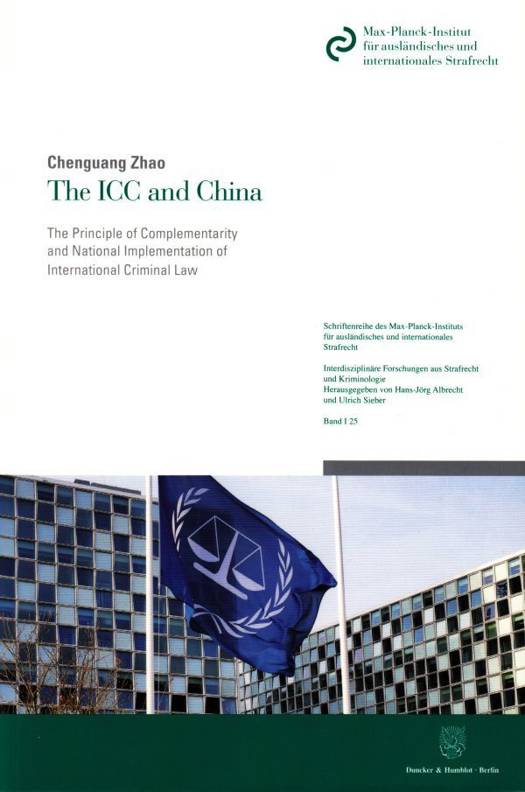
The ICC and China
The Principle of Complementarity and National Implementation of International Criminal Law
Chenguang Zhao
€ 82,45
+ 164 punten
Omschrijving
A disconnection has historically existed between international and domestic justice. In China, international justice and domestic justice were long treated as two autonomous yet interconnected systems, akin to the concept of Yin and Yang. With the establishment of the International Criminal Court (ICC) in 2002, the two systems began to increasingly work in tandem. The principle of complementarity is one of the cornerstones of the ICC's architecture, according to which states have primary jurisdiction over the ICC. So long as the legal system of a state can efficiently investigate and prosecute the core international crimes prohibited in the Rome Statute, the ICC will not intervene. However, if a state is unwilling or unable to investigate and prosecute these crimes, the ICC will invoke the principle of complementarity to step in. Thus, the principle of complementarity has an impact on the national implementation of international criminal law, as well as on its exercise of jurisdiction in many aspects, including for third party states. As a third party state to the ICC, China has ratified a number of international conventions, including those on genocide and torture; China is therefore obliged to prosecute these international crimes by implementing these international conventions into national law. However, the core crimes have thus far not been incorporated into Chinese criminal law. This research work focuses on the possible impact of the principle of complementarity on the implementation of international criminal law in China as a third party state and the future prospects of the relationship between China and the ICC based on this analysis. By so doing, it aims to contribute to the discourse on complementarity for both scholars and practitioners.
Specificaties
Betrokkenen
- Auteur(s):
- Uitgeverij:
Inhoud
- Aantal bladzijden:
- 259
- Taal:
- Engels
- Reeks:
- Reeksnummer:
- nr. 25
Eigenschappen
- Productcode (EAN):
- 9783428151950
- Verschijningsdatum:
- 26/07/2017
- Uitvoering:
- Paperback
- Formaat:
- Trade paperback (VS)
- Afmetingen:
- 147 mm x 224 mm
- Gewicht:
- 348 g


Alleen bij Standaard Boekhandel
+ 164 punten op je klantenkaart van Standaard Boekhandel
Wedstrijd


Beoordelingen
We publiceren alleen reviews die voldoen aan de voorwaarden voor reviews. Bekijk onze voorwaarden voor reviews.