



Je cadeautjes zeker op tijd in huis hebben voor de feestdagen? Kom langs in onze winkels en vind het perfecte geschenk!
- Afhalen na 1 uur in een winkel met voorraad
- Gratis thuislevering in België vanaf € 30
- Ruim aanbod met 7 miljoen producten
Je cadeautjes zeker op tijd in huis hebben voor de feestdagen? Kom langs in onze winkels en vind het perfecte geschenk!
- Afhalen na 1 uur in een winkel met voorraad
- Gratis thuislevering in België vanaf € 30
- Ruim aanbod met 7 miljoen producten





€ 53,45
+ 106 punten
Omschrijving
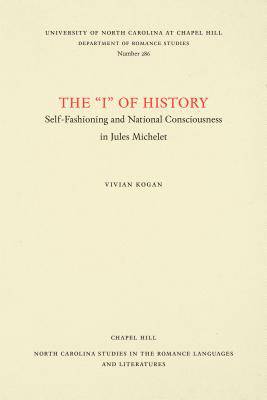
The "I" of History: Self-Fashioning and National Consciousness in Jules Michelet examines the poetics of the historian's self-portraiture as it intersects with nation and history. History exists because someone tells the story, but in Michelet's unique staging and performance of the past, the way the story is told is the real story. Long before Charles de Gaulle, Michelet asserted that he "was" France. His self-representation as the "I" of the nation and the embodiment of history ("moi-histoire") takes form as a rhetorical personification that shapes the historian's writing, even as it informs his project to use history to construct the nation. Offering a new multidisciplinary perspective, The "I" of History both exposes Michelet's vision of France, his grand narrative, and demystifies that narrative in its analysis of Michelet's final text, History of the Nineteenth Century.
Specificaties
Betrokkenen
- Auteur(s):
- Uitgeverij:
Inhoud
- Aantal bladzijden:
- 326
- Taal:
- Engels
- Reeks:
- Reeksnummer:
- nr. 286
Eigenschappen
- Productcode (EAN):
- 9780807892909
- Verschijningsdatum:
- 1/01/2006
- Uitvoering:
- Paperback
- Formaat:
- Trade paperback (VS)
- Afmetingen:
- 154 mm x 223 mm
- Gewicht:
- 589 g


Alleen bij Standaard Boekhandel
+ 106 punten op je klantenkaart van Standaard Boekhandel
CADEAU


Beoordelingen
We publiceren alleen reviews die voldoen aan de voorwaarden voor reviews. Bekijk onze voorwaarden voor reviews.