



Je cadeautjes zeker op tijd in huis hebben voor de feestdagen? Kom langs in onze winkels en vind het perfecte geschenk!
- Afhalen na 1 uur in een winkel met voorraad
- Gratis thuislevering in België vanaf € 30
- Ruim aanbod met 7 miljoen producten
Je cadeautjes zeker op tijd in huis hebben voor de feestdagen? Kom langs in onze winkels en vind het perfecte geschenk!
- Afhalen na 1 uur in een winkel met voorraad
- Gratis thuislevering in België vanaf € 30
- Ruim aanbod met 7 miljoen producten





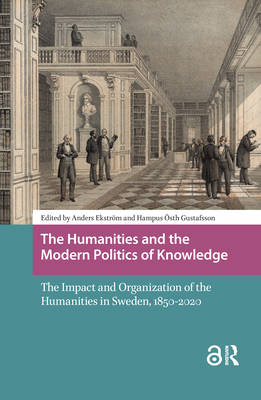
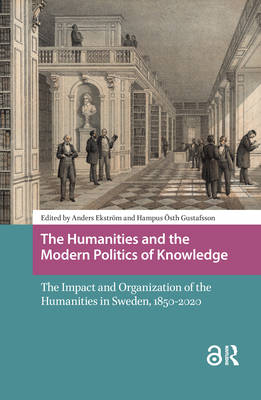
The Humanities and the Modern Politics of Knowledge
The Impact and Organization of the Humanities in Sweden, 1850-2020
€ 228,95
+ 457 punten
Omschrijving
This book addresses the shifting status of the humanities through a national case study spanning two centuries. The societal function of the humanities is considered from the flexible perspective of knowledge politics in order to historicize notions of impact and intellectual organization that tend to be taken for granted. The focus on modern Sweden enables an extended but still empirically coherent historical analysis, inviting critical comparisons with the growing literature on the history of the humanities from around the world. In the Swedish case, the humanities were instrumental to the construction of modern societal institutions, political movements, and professional education in the second half of the 19th century, while in the 20th century, the sense of future-making shifted towards science and medicine, and later technology and economy. The very rationale of the humanities was thus put under pressure as their social contract required novel negotiations. Their state and connections to society were nevertheless of a complex and ambiguous character, as is demonstrated by this volume whose contributions explore the many faces and places of the modern humanities.
Specificaties
Betrokkenen
- Uitgeverij:
Inhoud
- Aantal bladzijden:
- 294
- Taal:
- Engels
- Reeks:
Eigenschappen
- Productcode (EAN):
- 9789463728867
- Verschijningsdatum:
- 25/07/2022
- Uitvoering:
- Hardcover
- Formaat:
- Genaaid
- Afmetingen:
- 156 mm x 234 mm
- Gewicht:
- 589 g

Alleen bij Standaard Boekhandel
+ 457 punten op je klantenkaart van Standaard Boekhandel
CADEAU


Beoordelingen
We publiceren alleen reviews die voldoen aan de voorwaarden voor reviews. Bekijk onze voorwaarden voor reviews.