


- Afhalen na 1 uur in een winkel met voorraad
- Gratis thuislevering in België vanaf € 30
- Ruim aanbod met 7 miljoen producten
- Afhalen na 1 uur in een winkel met voorraad
- Gratis thuislevering in België vanaf € 30
- Ruim aanbod met 7 miljoen producten





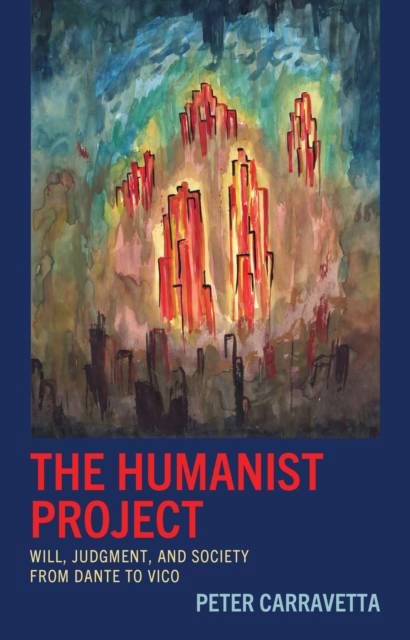
The Humanist Project
Will, Judgment, and Society from Dante to Vico
Peter Carravetta
Paperback | Engels
€ 44,45
+ 88 punten
Omschrijving
Humanistic studies has been subjected to critiques from the inside of the university disciplines and shrinking support structures on the outside; moreover, recent technological developments have trapped humans in the maws of the information machine, where will, agency, and dialogue are constantly stunted and mediated, disclosing a nihilistic, dilated present. Against this panorama, Peter Carravetta argues that there is a need to recover the "human" in humanistic reflection, here described as a free social, creative, yet elusive being, caught between idealizations (utopias, concepts of society, autonomy of powers), the realities of survival (basic economics and geographies), and the dynamics of power (the languages and the praxis of actually running the society). The Humanist Project: Will, Judgment, and Society from Dante to Vico presents Dante as the first true humanist, with his stressing the preeminence of free will and individual responsibility in the life of the polis; Boccaccio's later encyclopedic works as a philosophy of existence and history; Pico della Mirandola's autopoiesis of the thinking and acting human in light of recent theories of interpretation, the self, and society; Machiavelli and the challenge of chance in determining sociohistorical patterns; Campanella as the last true utopic writer and first to conceive of a realist, world-scale political vision; and Vico as the thinker who identifies and describes the dialectic between historical recurrences and the free will of the individual.
Specificaties
Betrokkenen
- Auteur(s):
- Uitgeverij:
Inhoud
- Aantal bladzijden:
- 294
- Taal:
- Engels
Eigenschappen
- Productcode (EAN):
- 9781666920383
- Verschijningsdatum:
- 25/06/2026
- Uitvoering:
- Paperback
- Formaat:
- Trade paperback (VS)
- Afmetingen:
- 152 mm x 229 mm
- Gewicht:
- 453 g


Alleen bij Standaard Boekhandel
+ 88 punten op je klantenkaart van Standaard Boekhandel
Cadeau

AANGERADEN


Beoordelingen
We publiceren alleen reviews die voldoen aan de voorwaarden voor reviews. Bekijk onze voorwaarden voor reviews.