


- Afhalen na 1 uur in een winkel met voorraad
- Gratis thuislevering in België vanaf € 30
- Ruim aanbod met 7 miljoen producten
- Afhalen na 1 uur in een winkel met voorraad
- Gratis thuislevering in België vanaf € 30
- Ruim aanbod met 7 miljoen producten





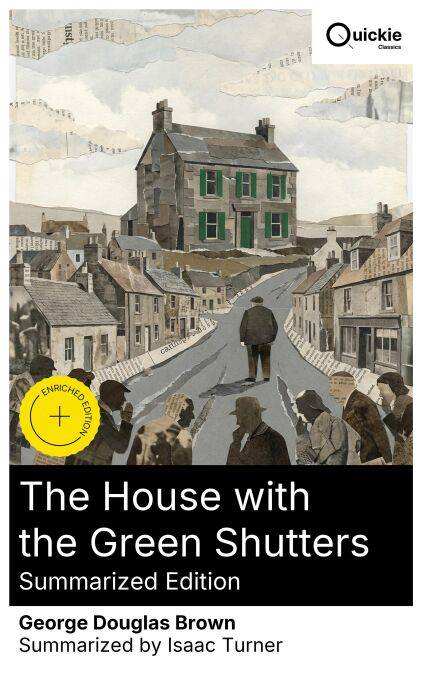
The House with the Green Shutters (Summarized Edition) E-BOOK
Enriched edition. Scottish realism against Kailyard: an Ayrshire town's envy, gossip, and the fall of a domineering carrier
George Douglas Brown
E-book | Engels
€ 1,99
+ 1 punten
Omschrijving
Set in the fictional Ayrshire town of Barbie, The House with the Green Shutters (1901) charts the rise and ruin of John Gourlay, a domineering carrier whose green-shuttered villa both proclaims and imprisons his status. Brown crafts a corrosive portrait of small-town envy and surveillance, where a 'committee' of neighbors polices reputation. In flinty, idiomatic prose that weds satiric omniscience to close psychological scrutiny, the novel repudiates the sentimental Kailyard school and aligns with European naturalism. George Douglas Brown, an Ayrshire-born graduate of Glasgow and Balliol, knew the textures of provincial ambition from within. Years as a London journalist sharpened his contempt for cozy mythologies of Scottish village life, and his early death soon after publication lends the book the urgency of a lone, defining statement. His classical training and exacting temperament shape the novel's unsparing structure and moral irony. This book is essential for students of Scottish realism and for readers interested in how communities manufacture success and ruin. As an antidote to Kailyard nostalgia and a precursor to modernist social critique, Brown's novel rewards close study with cool intelligence, indelible imagery, and unflinching truths.
Quickie Classics summarizes timeless works with precision, preserving the author's voice and keeping the prose clear, fast, and readable—distilled, never diluted. Enriched Edition extras: Introduction · Synopsis · Historical Context · Brief Analysis · 4 Reflection Q&As · Editorial Footnotes.
Quickie Classics summarizes timeless works with precision, preserving the author's voice and keeping the prose clear, fast, and readable—distilled, never diluted. Enriched Edition extras: Introduction · Synopsis · Historical Context · Brief Analysis · 4 Reflection Q&As · Editorial Footnotes.
Specificaties
Betrokkenen
- Auteur(s):
- Uitgeverij:
Inhoud
- Aantal bladzijden:
- 123
- Taal:
- Engels
Eigenschappen
- Productcode (EAN):
- 8596547878247
- Verschijningsdatum:
- 9/01/2026
- Uitvoering:
- E-book
- Beveiligd met:
- Digital watermarking
- Formaat:
- ePub


Alleen bij Standaard Boekhandel
+ 1 punten op je klantenkaart van Standaard Boekhandel
Cadeau

AANGERADEN


Beoordelingen
We publiceren alleen reviews die voldoen aan de voorwaarden voor reviews. Bekijk onze voorwaarden voor reviews.