


- Afhalen na 1 uur in een winkel met voorraad
- Gratis thuislevering in België vanaf € 30
- Ruim aanbod met 7 miljoen producten
- Afhalen na 1 uur in een winkel met voorraad
- Gratis thuislevering in België vanaf € 30
- Ruim aanbod met 7 miljoen producten





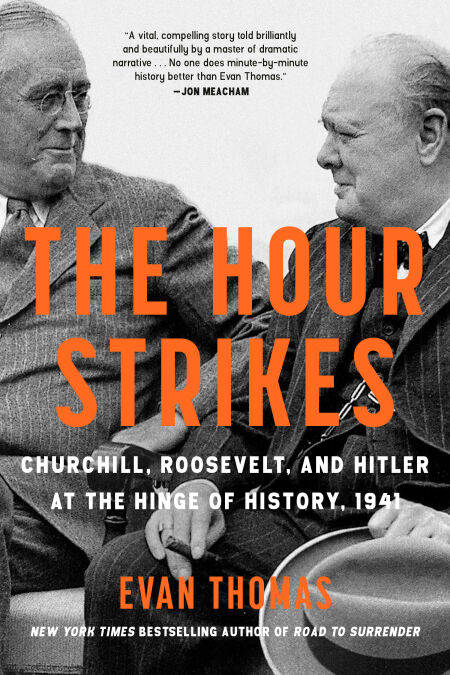
The Hour Strikes E-BOOK
Churchill, Roosevelt, and Hitler at the Hinge of History, 1941
Evan Thomas, Oscie Thomas
E-book | Engels
€ 16,18
+ 16 punten
Uitvoering
Omschrijving
A riveting, in-the-room account of the pivotal six months in 1941 that turned the tide of World War II, as Churchill and Roosevelt forged a crucial alliance and Hitler squandered his early advantage—from the New York Times bestselling author of Road to Surrender
In the summer of 1941, Winston Churchill was desperate—for two years, Britain had stood alone against Germany, heavily battered by the Blitz as another season of grinding war loomed. Franklin D. Roosevelt, the ally Churchill needed most, was coyly evading any commitment to join the war; Americans, FDR knew, weren't worried enough about the Axis to risk sending their sons overseas. Meanwhile for an arrogant Adolf Hitler, whose war machine had already swept across Europe and now looked poised any day to take Moscow, the continent seemed all but won.
By late December, though, Churchill would be lighting the White House Christmas tree with Roosevelt as an open ally, while in Berlin, basic supplies would be running out in an omen of the years to come. In the course of a few months, the war's direction was critically, permanently reversed—a result of crucial strategic calls made by the Allies, and of equally vital missteps by the Axis. Hitler's early advantage, once fumbled, would never be regained.
To bring these heart-pounding decisions to life, historian Evan Thomas vividly takes us into the war rooms of Roosevelt, Churchill, and Hitler. Placing us inside the span of a few months that would redefine the course of the war—as Churchill implores Roosevelt at a secret meeting in the Atlantic, as Hitler tries to parse German intelligence reports from D.C.—The Hour Strikes grants us intimate access to the men who would redefine a world.
In the summer of 1941, Winston Churchill was desperate—for two years, Britain had stood alone against Germany, heavily battered by the Blitz as another season of grinding war loomed. Franklin D. Roosevelt, the ally Churchill needed most, was coyly evading any commitment to join the war; Americans, FDR knew, weren't worried enough about the Axis to risk sending their sons overseas. Meanwhile for an arrogant Adolf Hitler, whose war machine had already swept across Europe and now looked poised any day to take Moscow, the continent seemed all but won.
By late December, though, Churchill would be lighting the White House Christmas tree with Roosevelt as an open ally, while in Berlin, basic supplies would be running out in an omen of the years to come. In the course of a few months, the war's direction was critically, permanently reversed—a result of crucial strategic calls made by the Allies, and of equally vital missteps by the Axis. Hitler's early advantage, once fumbled, would never be regained.
To bring these heart-pounding decisions to life, historian Evan Thomas vividly takes us into the war rooms of Roosevelt, Churchill, and Hitler. Placing us inside the span of a few months that would redefine the course of the war—as Churchill implores Roosevelt at a secret meeting in the Atlantic, as Hitler tries to parse German intelligence reports from D.C.—The Hour Strikes grants us intimate access to the men who would redefine a world.
Specificaties
Betrokkenen
- Auteur(s):
- Uitgeverij:
Inhoud
- Aantal bladzijden:
- 304
- Taal:
- Engels
Eigenschappen
- Productcode (EAN):
- 9780593597170
- Verschijningsdatum:
- 30/11/2026
- Uitvoering:
- E-book
- Beveiligd met:
- Adobe DRM
- Formaat:
- ePub


Alleen bij Standaard Boekhandel
+ 16 punten op je klantenkaart van Standaard Boekhandel
Cadeau

AANGERADEN


Beoordelingen
We publiceren alleen reviews die voldoen aan de voorwaarden voor reviews. Bekijk onze voorwaarden voor reviews.